Oil painting -> List of Painters -> Bartolome Esteban Murillo
Bartolome Esteban Murillo
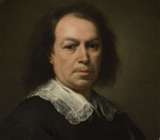 |
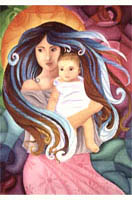
Early Life: Bartolome-Esteban-Murillo Murillo was born in Seville, the youngest son in a family of fourteen. His father was the barber and surgeon Gaspar Esteban, and his mother's name was María Pérez Murillo. His parents died when Murillo was still very young, and the artist was basically brought up by his aunt and uncle. Murillo married Beatriz Cabrera in 1645; their first child, named Maria, was born shortly after their marriage. The mother and daughter became the subjects of two of his paintings; Madonna of the Rosary and Madonna and Child. |
Career:
Murillo began his art studies under Juan del Castillo in Seville. Murillo became familiar with Flemish painting the great commercial importance of Seville at the time ensured that he was also subject to influences from other regions. His first works were influenced by Zurbarán Jusepe de Ribera and Alonso Cano and he shared their strongly realist approach. As his painting developed, his more important works evolved towards the polished style that suited the bourgeois and aristocratic tastes of the time, demonstrated especially in his Roman Catholic religious works.
|
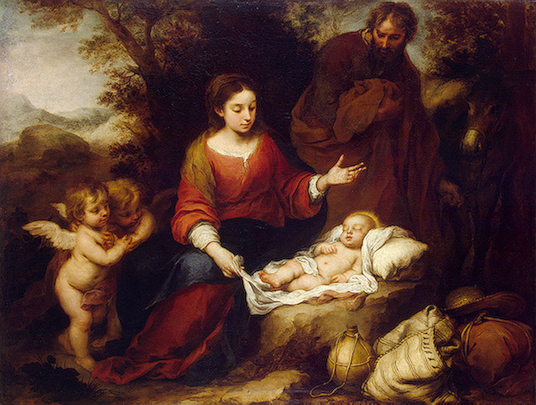
In 1642, at the age of 26 he moved to Madrid, where he most likely became familiar with the work of Velázquez, and would have seen the work of Venetian and Flemish masters in the royal collections; the rich colors and softly modeled forms of his subsequent work suggest these influences. He returned to Seville in 1645. In that year, he painted thirteen canvases for the monastery of St. Francisco el Grande in Seville which gave his reputation a well-deserved boost. Following the completion of a pair of pictures for the Seville Cathedral he began to focus in the themes that brought him his best success, the Virgin and Child, and the Immaculate Conception.