Oil painting -> List of Painters -> William Blake
William Blake
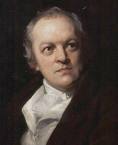 |
Early days: William Blake was born in 28 Broad Street, Golden Square, London, England on 28 November 1757, to a middle-class family. He was the third of seven children, two of whom died in infancy. Blake's father, James, was a hosier. William never attended school, and was educated at home by his mother Catherine Wright Armitage Blake. The Blakes were Dissenters, and are believed to have belonged to the Moravian Church. The Bible was an early and profound influence on Blake, and would remain a source of inspiration throughout his life. |
Career:
Blake returned to London in 1804 and began to write and illustrate Jerusalem (1804–1820), his most ambitious work. Having conceived the idea of portraying the characters in Chaucer's Canterbury Tales, Blake approached the dealer Robert Cromek, with a view to marketing an engraving. Knowing that Blake was too eccentric to produce a popular work, Cromek promptly commissioned Thomas Stothard, a friend of Blake's, to execute the concept. When Blake learned that he had been cheated, he broke off contact with Stothard. He also set up an independent exhibition in his brother's haberdashery shop at 27 Broad Street in the Soho district of London. The exhibition was designed to market his own version of the Canterbury illustration (titled The Canterbury Pilgrims), along with other works. As a result he wrote his Descriptive Catalogue (1809), which contains what Anthony Blunt has called a "brilliant analysis" of Chaucer. It is regularly anthologized as a classic of Chaucer criticism. It also contained detailed explanations of his other paintings.
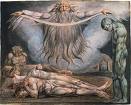
The exhibition itself, however, was very poorly attended, selling none of the temperas or watercolors. Its only review, in The Examiner, was hostile.