Oil Painting » List of Painters » Abidin Dino
EARLY DAYS:
Abidin Dino was born in Istanbul, Turkey in 1883 to a Turkish family who had migrated to the city a few years earlier. He was the son of a wealthy merchant, and his parents were both very involved in the city's cultural life. As a young child, Abidin was exposed to art, music, and literature, which sparked his lifelong fascination with the arts.
At an early age, Abidin was taught to draw and paint by his father and his uncle, who was a professional artist. He quickly developed a great aptitude for art and was soon producing work of a very high standard. He continued to develop his skills, eventually developing a style that was distinctively his own.
Abidin attended the Imperial School of Fine Arts in Istanbul, where he studied painting, sculpture, and architecture. He also studied the works of great European artists, such as Rembrandt and Rubens, as well as the traditional Ottoman art forms. Abidin's artistic style soon began to combine elements of both traditional and modern European art.
In 1904, Abidin left Istanbul to study in Paris, where he was exposed to the works of the Impressionists and the Post-Impressionists. He quickly became fascinated by the works of the Impressionists and the Post-Impressionists, and began to incorporate their techniques into his own work.
When Abidin returned to Istanbul in 1909, he was already a brilliant painter and draughtsman. His work was highly sought after, and he quickly became a very successful artist. He also taught art classes at the Imperial School of Fine Arts, and was commissioned to produce numerous works for the Ottoman court.

Personal Details
| Name | Abidin Dino |
| Place of birth | Istanbul |
| Date of Birth | March 23, 1913 |
| Date of Death | December 7, 1993 |
| Nationality | Turkish |
| Field | Painting,Caricature,Sculpture |
| Founder | Group D |
| Popular Works | Book - Guzin's Abidins |
Abidin's work was heavily influenced by the European art movements that he had been exposed to in Paris. However, he also incorporated traditional Ottoman motifs and symbols into his work, creating a unique style that was distinctly his own. His work often featured scenes from everyday Turkish life, such as fishermen, children playing, and family gatherings.
In 1918, Abidin left Istanbul to study in Rome. While in Rome, he continued to paint and draw, and was heavily influenced by the work of the Renaissance masters. He also studied the works of the Baroque and Rococo artists, and began to incorporate these elements into his own work.
During his stay in Rome, Abidin also painted numerous scenes of the city. His paintings captured the beauty of the city, and his unique style soon made him a popular artist.
By the time Abidin returned to Istanbul in 1921, he was a celebrated artist. He continued to work and exhibit his work, and was commissioned to produce numerous works for the Ottoman court.
Abidin Dino was an immensely talented artist who created a unique style of art. His work combined elements of traditional Ottoman art with modern European techniques, and was highly sought after by collectors and art lovers alike. He was a brilliant painter and draughtsman, and his works still remain some of the most admired in Turkey today.
CAREER:
Abidin Dino was a Turkish-born painter, sculptor, and graphic artist. He was born in Istanbul in 1913 and spent most of his life in France.
He is considered one of the most important French painters of the 20th century. He was known for his unique style, which combined elements of abstraction, cubism, and surrealism. His works often explored themes of alienation, identity, and nostalgia.
Dino began his artistic career in Istanbul in 1932, when he entered the Academy of Fine Arts. After graduating in 1935, he moved to Paris, where he became a student at the Acad?mie de la Grande Chaumi?re. During his time in Paris, he was influenced by the works of Picasso, Matisse, and Klee.
In 1940, Dino had his first solo exhibition in Paris. The show garnered critical acclaim and was a turning point in the artist's career. From then on, he exhibited his works in galleries and museums around the world. He also created a number of public sculptures, which can be found in cities such as Istanbul, Paris, and London.
In the 1950s and 1960s, Dino's works became more abstract and experimental. He began to incorporate elements of cubism and surrealism into his paintings, and his works began to explore themes of alienation and identity. He also began experimenting with new techniques, such as painting on glass.
In the 1970s and 1980s, Dino continued to explore themes of alienation and identity in his works. He also began to explore the relationship between humans and nature. His works often featured animals and plants, which he used to express his personal philosophy and beliefs.
Throughout his career, Dino also created a number of prints, drawings, and sculptures. His works were exhibited in galleries and museums throughout Europe and the United States. He also participated in numerous international exhibitions, including the Venice Biennale and the Paris Biennale.
Dino continued to paint and create sculptures until his death in 1993. His works are held in the collections of major museums around the world, including the Centre Pompidou in Paris, the Tate Modern in London, and the Museum of Modern Art in New York. His legacy continues to inspire and influence contemporary artists.
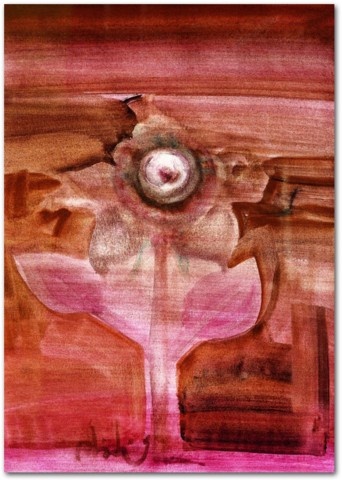
WORKS OF ABIDIN DINO:
 |