Oil Painting » Painting techniques » Brush painting
The art of brush painting using brush and ink is of Chinese origin, but has developed extensively throughout the region. This article outlines the basic foundation, history, and techniques of this art, and then directs the reader to national schools: Chinese brush painting, Korean brush painting, Vietnamese brush painting, Japanese brush painting, and the like.
Japanese Brush painting :
Japanese brush painting is a relatively recent development and emerged out of the Buddhist schools of calligraphy (Shodo).
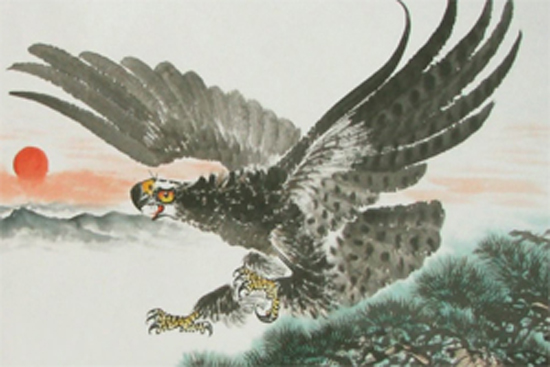
The ancient art of Japanese brush painting, or sumi-e, is strikingly beautiful, simple and pure, yet strong and resonant. Closely related to Zen philosophy, the art of sumi-e is executed with black ink on white rice paper using bamboo brushes. Subjects in Japanese brush painting include landscapes, flowers, or animals, anything that suggests a closeness to the natural world. Recent Innovations.
Historically brush painting has been done on hand-made paper of natural materials, with black ink, and bamboo brushes with natural bristles. Artists globally have introduced new techniques, new materials, new means of holding ink and using ink, and as well the addition of colours. This has challenged the historic notion of the great brush artists that viewers can "see colour" in black inks, and have no need to be given colours forcibly by coloured inks as the gradations of ink itself make colour possible in the mind. The use of the entire spectrum of Sandoz dyes, has given a huge range of new colours and these have been integrated quickly: the primary colours first, and then newer colours as well - particularly in flower painting, and in over-seas brush artists and Europeans who are less restricted by traditional brush painting codes.
Using a paint brush should be natural. There is a process to suitable paint brush usage and it involves these steps: