Oil painting is done on surfaces with pigment ground into a medium of oil — especially in early modern Europe, linseed oil. Other oils occasionally used include poppyseed oil, walnut oil, and safflower oil. These oils result in different properties in the oil paint, such as less yellowing of different drying times. The oil usually takes weeks to dry.
It was probably developed for decorative or functional purposes in the High Middle Ages. Surfaces like shields — both those used in tournaments and those hung as decorations — were more durable when painted in oil-based media than when painted in the traditional tempera paints. Many Renaissance sources credit northern European painters of the 15th century with the "invention" of painting with oil media on wood panel — Jan van Eyck often mentioned as the "inventor". The popularity of oil grew in 16th century Venice, where a water-durable medium was essential.
Recent advances in chemistry have produced modern water miscible oil paints that can be used with, and cleaned up in, water. These are still "real" oil-paints in every sense of the meaning. Small alterations in the molecular structure of the oil creates this water miscible property.
A still-newer type of paint, heat-set oils, remain liquid until heated to 265–280 °F (130–138 °C) for about 15 minutes. Since the paint never dries otherwise, cleanup is not needed (except when one wants to use a different color and the same brush). Although not technically true oils (the medium is an unidentified "non-drying synthetic oily liquid, imbedded with a heat sensitive curing agent"), the paintings resemble oil paintings and are usually shown as oil paintings.
?Oil paint eventually became the principal medium used for creating artworks as its advantages became widely known.Winsor and Newton, Sennelier, Gamblin, Rembrandt, Lukas 1862, Lukas Studio, Old Holland, Michael Harding and Charvin are some of the brands of oil paints.Winsor and Newton Artisan, Lukas Berlinand Woil water mixable oil colors includes water soluble oil colors

Battle of Somosierra
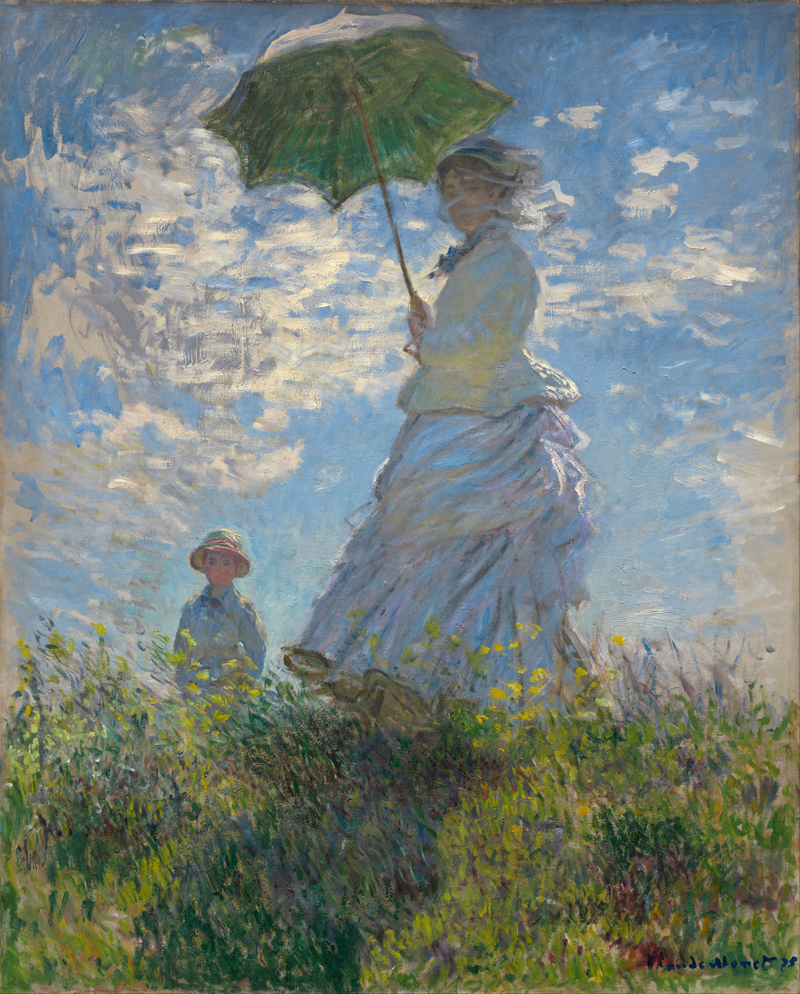
Woman with a Parasol
ACRYLIC PAINTS |
OIL PAINTS |
Acrylic paints are water-based |
Oil paints are oil-based |
The vehicle used for acrylic paint is water for suspension of acrylic polymer which is served as the binder |
The vehicle and binder used for oil paint is drying seed |
The pigment load for acrylic paint is comparatively low |
The pigment load for oil paint is higher |
Flexibility level is very high |
Flexibility level is very low |
Acrylic paint can be cleaned out of a brush with any soap |
Oil paint needs a specific type to be sure to get all the oil out of the brushes. |