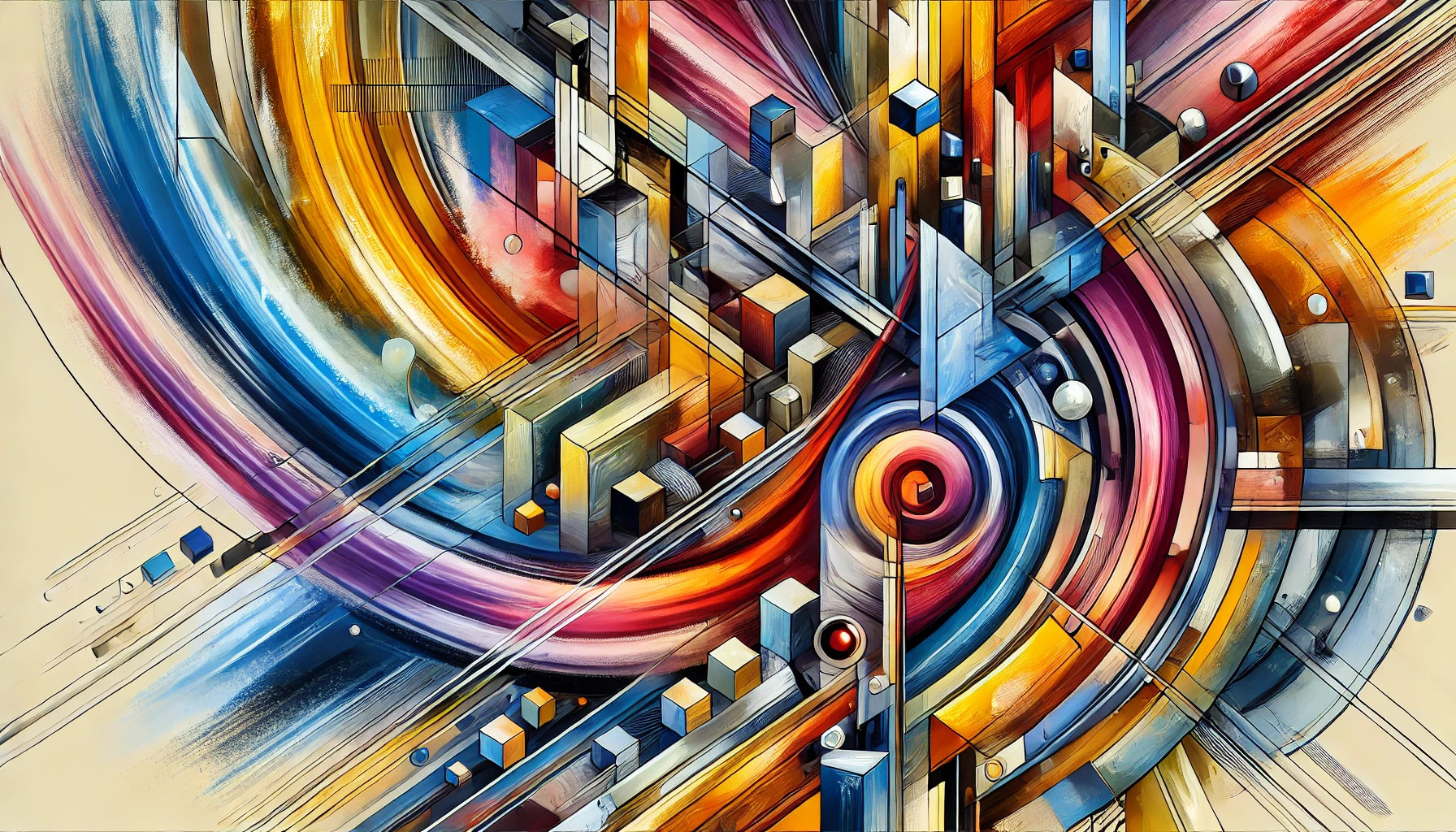
Painting has been a fundamental form of human expression for thousands of years, evolving through different eras, cultures, and artistic movements. From prehistoric cave art to contemporary digital paintings, the medium has continually transformed, reflecting the beliefs, emotions, and creativity of humanity.

"In spite of everything I shall rise again:
I will take up my pencil,
which I have forsaken in my great discouragement,
and I will go on with my drawing."
The earliest known paintings date back to 40,000 BCE, found in caves such as Lascaux in France and Altamira in Spain. These prehistoric cave paintings depicted animals, human figures, and handprints, possibly created for religious rituals or storytelling. Early humans used natural pigments like ochre, charcoal, and clay to paint on rock surfaces.
In Ancient Egypt (3000 BCE ? 300 CE), paintings were used to decorate tombs and temples. Egyptian artists painted scenes of gods, pharaohs, and daily life using symbolic colors and a distinct, two-dimensional style. Greek and Roman paintings (500 BCE ? 500 CE) introduced fresco techniques, particularly in murals like those in Pompeii, showcasing mythology and portraits with improved depth and perspective.
The Middle Ages (500?1400 CE) saw the dominance of religious art. Byzantine icons, mosaics, and illuminated manuscripts focused on Christian themes. Gothic paintings later introduced more naturalistic styles, with artists like Giotto leading the transition toward realism.
The Renaissance (1400?1600 CE) marked a major shift in painting, focusing on humanism, perspective, and classical beauty. Artists such as Leonardo da Vinci, Michelangelo, and Raphael mastered techniques like sfumato (blurring edges) and chiaroscuro (light and shadow contrast). The invention of oil paint allowed for richer colors and finer details, as seen in Da Vinci?s "Mona Lisa" and Michelangelo's Sistine Chapel frescoes.
The Baroque period (1600?1750 CE) emphasized dramatic lighting, intense emotion, and grandeur. Caravaggio, Rembrandt, and Velazquez created powerful religious and historical scenes with deep contrasts.
The Rococo movement (1700?1780 CE) followed, bringing light, playful, and decorative art, often seen in the works of Fran?ois Boucher and Jean-Honor? Fragonard.
By the late 18th century, Neoclassicism emerged, inspired by Ancient Greek and Roman styles. Jacques-Louis David and Jean-Auguste-Dominique Ingres created paintings with clean lines and heroic themes, such as "The Death of Socrates".
The 19th century saw the rise of Romanticism, celebrating emotion, nature, and individuality. Artists like Francisco Goya and J.M.W. Turner created expressive works filled with movement and drama.
Later, Impressionism (1860s) revolutionized painting with Claude Monet, Pierre-Auguste Renoir, and Edgar Degas, who used short, visible brushstrokes and bright colors to capture fleeting moments of light and atmosphere.
The 20th century saw radical experimentation with movements like Cubism (Picasso, Braque), Surrealism (Dali, Magritte), Abstract Expressionism (Pollock, Rothko), and Pop Art (Warhol, Lichtenstein).
Today, digital painting, AI-generated art, and mixed media continue to expand the possibilities of painting, keeping the tradition alive while embracing new technologies.