Adolph von Menzel
EARLY DAYS:
Adolph von Menzel was a German artist born in the year 1815 in Breslau, Prussia. He was a renowned artist of the 19th century, known for his prints and drawings that featured a wide range of subjects from historical scenes to landscapes and genre paintings. He was a master of both painting and printmaking, and his works are considered to be among the most important of the German Romantic movement.
Menzel was born to a middle-class family and received his early artistic education at the local academy in his native city. He later studied at the Prussian Academy of Arts in Berlin, where he was taught by the renowned landscape painter Jakob Wilhelm Mechau. After completing his studies, Menzel moved to Dresden where he worked as an illustrator for a local publishing house. It was here that he began to develop his style, using a more naturalistic approach to painting that combined elements of realism and fantasy.
In 1847, Menzel moved to Munich and began to focus on creating prints and drawings, which soon caught the attention of the art world. He quickly gained a reputation for his skillful technique and attention to detail. His prints featured both real and imaginary places and characters, often depicting historical events or scenes from literature. His style was highly influential, and he was soon considered one of the most important printmakers of the 19th century.
In the 1850s, Menzel began to focus more on painting, producing works such as "The Iron Rolling Mill" and "The Flute Concert of Frederick the Great". He also created a number of portraits, including a self-portrait. These works demonstrated his mastery of light, shade and composition, and further increased his reputation as one of the great painters of the era.
Menzel was also a prolific draftsman and lithographer. He published numerous portfolios of his drawings and prints, and also wrote a book on the subject of drawing. This book provided insight into his creative process, and helped to further popularize his style.
Throughout his life, Menzel was highly respected by his peers and he maintained a successful career until his death in 1905. His works are still highly regarded today, and are admired for their technical skill and emotional power. Adolph von Menzel was a major figure of the German Romantic movement, and his work continues to inspire artists around the world.
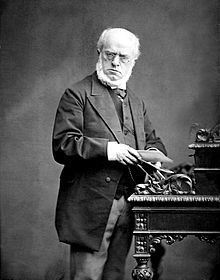
Personal Details:
CAREER:
Adolph von Menzel was a German painter and printmaker who is considered one of the most important artists of the 19th century. Menzel initially studied architecture at the Berlin Technical School but later turned to painting and drawing, training with Carl Steffeck in Berlin and Carl Wach in Munich.
In 1836, Menzel traveled to Italy, where he was exposed to the works of Renaissance masters such as Raphael and Michelangelo. He returned to Berlin in 1838 and began painting historical scenes. He was also a prolific printmaker, producing etchings and lithographs of his works.
Menzel's art was greatly influenced by the Nazarene movement, which sought to revive the classical style of Renaissance art. His works often featured themes of everyday life, such as his famous painting The Iron Rolling Mill (1875). His work was also influenced by the Romantic movement, as seen in his painting of the Battle of Leipzig (1813).
Menzel's work was highly acclaimed by his contemporaries. He was appointed court painter to King Frederick William IV of Prussia in 1841 and was made a member of the Royal Academy of Fine Arts in Berlin in 1845.
In 1848, Menzel began a series of works depicting King Frederick's various triumphs, such as his coronation in 1851 and his jubilee in 1858. He also painted a series of portraits of the royal family.
In 1862, Menzel was appointed professor of painting at the Berlin Academy of Art, where he taught for eight years. During this time, he created a portfolio of lithographs of his works, which were published in 1866 and 1867.
In 1871, Menzel was made an honorary member of the Royal Academy and was awarded the Order of Merit of Prussia. He died in Berlin in 1905.
Adolph von Menzel was one of the most important artists of the 19th century and his works remain highly influential today. He was a master of both painting and printmaking, and his works are renowned for their realistic detail and dramatic lighting. His paintings of historical events and portraits of the Prussian royal family are some of his most iconic works. His legacy continues to live on today, as his works are displayed in museums around the world.