Oil Painting » List of Painters » Albert Henry Krehbiel
EARLY DAYS:
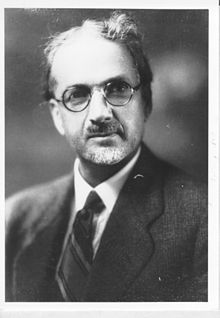
Albert Henry Krehbiel (November 25, 1873 - June 29, 1945) was an American impressionist painter.
Albert Henry Krehbiel was an American impressionist painter born in November 1873. He was the son of a pastor and the eldest of three children. Growing up, he developed an affinity for the arts. He attended Washburn College, where he studied painting and drawing, and graduated in 1898.
In the early 1900s, Krehbiel moved to New York City to pursue his dream of becoming a professional artist. He studied at the Art Students League under James Carroll Beckwith and Frank Vincent DuMond, becoming part of an impressive group of students that included such luminaries as Jackson Pollock and Georgia O'Keeffe. His studies gave him a strong foundation in the fundamentals of painting, specifically in the use of color and light.
In the early 1900s, Krehbiel's artwork began to take shape. He initially painted landscapes and seascapes, but quickly moved on to more abstract works. He is best known for his impressionist works, which were characterized by their use of vibrant color and light. He was particularly inspired by the work of the French Impressionists such as Monet and Renoir, and was able to capture the light and atmosphere of a scene in a way that was reminiscent of these great artists.
Krehbiel's work gained recognition and acclaim, and he was invited to exhibit his work throughout the United States and Europe. He also gained a following of patrons and students, who were attracted to his passionate approach to art. His art was featured in several major exhibitions, including the 1909 International Exhibition of Modern Art in New York and the 1913 Armory Show in Chicago. He also received several awards for his artwork, including the Silver Medal at the 1914 Panama-Pacific International Exposition.
Krehbiel's career continued to blossom throughout the 1910s and 1920s. He was invited to teach at the Art Institute of Chicago and his artwork was featured in several major exhibitions. He also began to explore other aspects of art, such as sculpture and printmaking. Krehbiel's career was cut short by his premature death in 1945, but his legacy lives on in the works of his students and in the many exhibitions and collections featuring his artwork. He is remembered as one of the most influential American impressionist painters of the early 20th century.
Personal Details
| Name | Albert Henry Krehbiel |
| Place of birth | Denmark, Iowa |
| Date of Birth | November 25, 1873 |
| Date of Death | June 29, 1945 |
| Nationality | American |
| Field | ainting;Drawing ;Muralist. |
CAREER:
Albert Henry Krehbiel earliest works were done in a dark, realistic style. However, he quickly began to develop a softer, Impressionist style, influenced by artists such as Claude Monet and Pierre-Auguste Renoir. His later works had a focus on light and color, and he often used a bright palette to convey a sense of atmosphere and emotion.
Krehbiel was an active member of the Chicago art scene and was involved in several exhibitions throughout the city. In 1899, he exhibited at the Art Institute of Chicago, and in 1900, he had his first solo show at the H.D. French Gallery.
Krehbiel's paintings were exhibited all over the world, including in Berlin, Munich, London, and New York. He was particularly well-known in Chicago, where he exhibited regularly throughout the early 20th century. He also participated in several traveling exhibitions, including the International Exhibition of Fine Arts in San Francisco in 1915 and the Panama-Pacific International Exposition in San Francisco in 1915.
Throughout his career, Krehbiel received numerous awards, including the Silver Medal at the Panama-Pacific International Exposition in 1915, and the Gold Medal at the Panama-California Exposition in San Diego in 1916.
Krehbiel's work can be found in several major collections, including the Art Institute of Chicago, the Corcoran Gallery of Art, the Los Angeles County Museum of Art, and the Minneapolis Institute of Art. His work is also part of the permanent collections of several universities, including Harvard University and the University of California, Los Angeles.
Krehbiel died on June 29, 1945 in Los Angeles, California. His legacy lives on in his works, which continue to be celebrated for their beauty and technical skill. He is remembered as one of the leading American impressionists of the early 20th century.