Oil Painting » List of Painters » Alexander Calder
ALEXANDER CALDER:
Alexander Calder (1898-1976) is widely considered to be one of the most influential and innovative sculptors of the 20th century. He is credited with creating the concept of "mobile" sculpture, which is a form of kinetic art that moves with air currents or motors. Calder's early works were mainly paintings, drawings and prints. These works were strongly influenced by the Abstract Expressionist movement of the 1940s and 1950s.
Alexander Calder was born in Philadelphia, Pennsylvania on July 22, 1898. His father was a renowned sculptor and his mother was a painter. He grew up in a creative household and was encouraged to pursue his artistic interests. As a child, he created many sculptures from found objects and wire. He also learned how to make jewelry from his grandfather. As a young adult, he studied mechanical engineering and graduated from the Stevens Institute of Technology in 1919.
After graduating, Calder moved to New York City and began creating abstract paintings. He was heavily influenced by the work of Marcel Duchamp and Joan Mir?. In 1926, he moved to Paris and began creating sculptures from metal wire. His first mobile sculpture, titled "White Panel", was created in 1931. This sculpture was composed of painted wire, metal pieces, and string that moved in response to air currents.
In 1932, Calder created his first large-scale sculpture, "Circus". This sculpture featured a complex system of interconnected wire pieces that moved in response to air currents. His circus sculptures soon became a sensation, and he continued to create new and larger works. He also experimented with other materials, such as aluminum, steel, and wood.
In 1934, Calder created his first kinetic artwork, titled "Lobster Trap and Fish Tail". This sculpture was composed of brightly colored wire pieces that moved in response to air currents. The sculpture was an instant success and was exhibited at the Museum of Modern Art in New York.
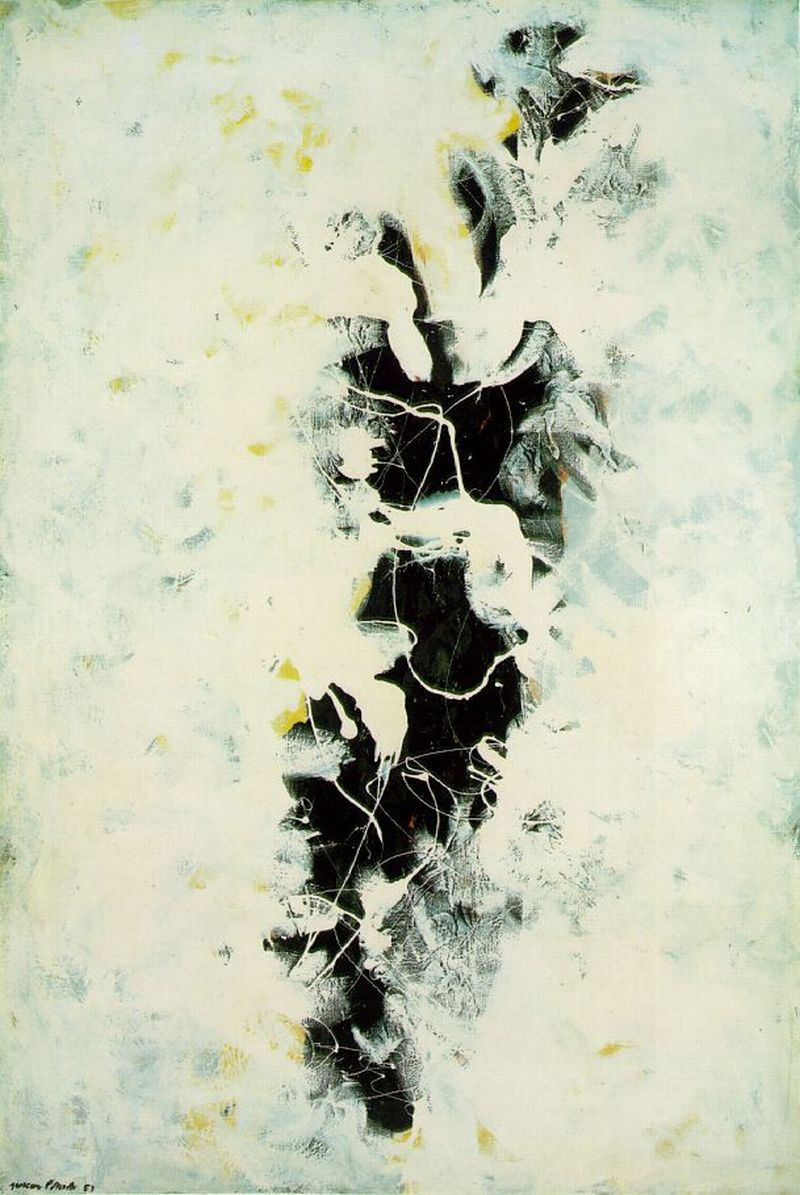
Throughout the 1930s, Calder continued to experiment with wire sculpture and kinetic art. He also began creating paintings and prints. In 1940, he created his first large-scale abstract painting, "Black and White". Calder's artwork was exhibited in numerous galleries and museums around the world. He also created commissioned pieces for many notable individuals, including the Rockefeller family.
Alexander Calder is widely considered to be one of the most innovative and influential sculptors of the 20th century. His unique combination of painting, sculpting, and kinetic art revolutionized the world of modern art. His early works are still celebrated today, and his legacy continues to be an inspiration to future generations of artists.
Personal Details
| Name | Alexander Calder |
| Place of birth | Lawnton,Pennsylvania |
| Date of Birth | July 22,189 |
| Date of Death | November 11,1976 |
| Nationality | United States |
| Field | Artist |
| Training | Stevens Institute of Technology, Art Students League of New York |
| Popular Paintings | Cirque Calder ,Aztec Josephine Baker |
| Movement | Surrealism |
CAREER:
Calder attended the Stevens Institute of Technology in Hoboken, New Jersey, where he studied mechanical engineering. He graduated in 1919 and began working as an engineer in a variety of industries, including shipbuilding and automotive. In 1923, he moved to Paris, where he studied painting and sculpture at the Acad?mie de la Grande Chaumi?re. He also attended classes at the Acad?mie Julian, where he met other famous artists such as Marcel Duchamp and Fernand L?ger.
In 1926, Calder returned to the United States and moved to New York City, where he began working as a freelance illustrator. His work included illustrations for books, newspapers, and magazines. In 1928, he created his first mobile, a type of kinetic sculpture that he would become famous for. The mobile was inspired by a visit to a circus, where he was fascinated by the performances of the acrobats and the movement of the animals.
Calder's mobiles caught the attention of many prominent artists and collectors. Marcel Duchamp, in particular, was impressed by Calder's ability to create movement and energy with simple materials. In 1931, Calder was invited to exhibit his mobiles at the Museum of Modern Art in New York. This was the first solo exhibition of his work, and it established him as a major figure in the world of modern art.
Calder continued to create sculptures and mobiles throughout the 1930s and 1940s. He was also commissioned to create large-scale projects for public spaces, such as the Stuyvesant Park fountain in New York City, the sculptures for the National Academy of Sciences in Washington D.C., and the monumental stabile for the St. Louis Art Museum.
In 1955, Calder was awarded the Grand Prize for Sculpture at the Venice Biennale. This was a major recognition of his work, and it established him as one of the preeminent sculptors of the 20th century. Calder continued to create sculptures and mobiles until his death in 1976.
Throughout his career, Calder was highly influential in the world of modern art. He was an innovator who pushed the boundaries of what sculpture could be, creating works that were both visually stunning and technically impressive. He was also an inspiring teacher and mentor, passing on his knowledge and techniques to future generations of sculptors. Today, his works can be found in museums and galleries around the world, and his influence is still felt in the world of modern art.
WORKS OF ALEXANDER CALDER: