Oil painting -> List of Painters -> Alexander Nasmyth
EARLY DAYS:
Alexander Nasmyth was born in Edinburgh in 1758. He was the son of a blacksmith and was educated at the Royal High School. After graduating, he worked in his father's smithy and quickly developed a passion for mechanics. In 1780, he opened his own smithy in Edinburgh and quickly gained a reputation for creating finely crafted pieces. His work soon attracted the attention of prominent figures in the city such as Sir William Chambers, the designer of Edinburgh's Royal Mile, and the Earl of Morton, who became Nasmyth's patron.
Nasmyth quickly established himself as one of the most talented blacksmiths in Edinburgh and soon began to experiment with new tools and techniques. He was particularly interested in the use of steam power and built the first steam hammer in the city. This revolutionary invention allowed him to craft much larger pieces than was previously possible. He also developed various tools and machines to improve the efficiency of his work, such as a lathe, a planer, and a milling machine.
In 1790, Nasmyth constructed a new workshop in the Grassmarket area of Edinburgh, which he named the 'Grassmarket Foundry'. This workshop enabled him to produce a variety of products such as railway locomotives, mining machinery, and even a steam-powered carriage. He also produced the world's first steam-powered printing press. Nasmyth's success led to him becoming a Fellow of the Royal Society of Edinburgh in 1808.
Nasmyth continued to refine his skills and acquire new technology throughout his career. He designed and built several large steam engines for ships and factories, and developed a machine for cutting and drilling gun barrels. He also created a machine for forging railway track and pioneered the use of steel in construction.
Nasmyth's work revolutionised the way that engineering was done in Scotland and he was soon recognised as one of the country's leading engineers. His influence can still be seen in the modern engineering industry and his name lives on in the Alexander Nasmyth Memorial Award, which is presented annually to a distinguished engineer.
Nasmyth was also a great believer in education and he created a number of educational opportunities for aspiring engineers. He wrote a series of books on engineering and mathematics, and he founded the Edinburgh School of Arts and Manufactures in 1826. The school was later renamed the Edinburgh University of Technology and is now known as the University of Edinburgh.
Nasmyth passed away in 1840, but his legacy continues to this day. He was a pioneer of modern engineering and his work had a lasting impact on the industry. His innovations and inventions enabled engineers to create bigger and better machines than ever before, and his legacy is still felt in the engineering industry today.
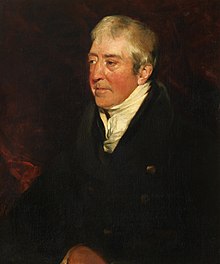
Personal Details:
CAREER:
Alexander Nasmyth began to apprentice with a local coach painter, and it was during this period that Nasmyth developed a strong interest in engineering.
Nasmyth quickly became known as an outstanding artist, and the demand for his paintings was high. His skill in producing detailed, lifelike landscapes soon earned him the title of "Scotland's Painter Poet". He also developed a keen interest in engineering, and eventually merged his two passions together by inventing a steam hammer in 1838. This invention allowed him to work on larger scale projects, such as railway bridges and canals.
Nasmyth soon became recognised as one of the foremost engineers of his time, and he was invited to join the Royal Society of Edinburgh in 1817. He used his skills to build a number of bridges, canals, and railways across Scotland. He was also a pioneer in the development of steam-powered ships, and in 1821 he became a founding member of the Institution of Civil Engineers. His steam-powered paddle steamers were used on the Clyde and Forth rivers, and revolutionised river transport in the region.
During his lifetime, Nasmyth's paintings were highly sought after and he was considered one of the foremost landscape painters of his time. His work was exhibited in London, Edinburgh, and Glasgow, and many of his paintings are now held in public collections around the world. He was also a passionate advocate for the rights of artists, and was the driving force behind the formation of the Society of Artists in Scotland in 1822.
Alexander Nasmyth was a hugely influential figure in the development of engineering and landscape painting in Scotland. His inventive genius, combined with his skill and dedication to his craft, made him a celebrated figure in both fields. He was a pioneer of steam-powered ships and a passionate advocate for the rights of artists. Nasmyth died in Edinburgh on 7 May 1840, aged 81. His legacy lives on in the many bridges, canals, and railways he helped to build, as well as in the many beautiful paintings of the Scottish countryside he left behind.