Oil painting -> List of Painters -> Alexander Rodchenko
EARLY DAYS:
Alexander Rodchenko was a pioneering artist and designer of the early 20th century. He is widely regarded as one of the most influential figures of Russian and European art in the 20th century, and his influence can be felt in many different fields, including painting, sculpture, photography, graphic design, and architecture.
Rodchenko was born in St. Petersburg, Russia, in 1891. As a young man, he took classes at the Kazan Art School and studied painting under Alexandra Exter. He also studied at the Moscow School of Painting, Sculpture, and Architecture, and traveled frequently to study abroad in Germany, Italy, and France. During the 1920s, he became a leader in Russia's avant-garde art movement. He was one of the founders of the Russian Constructivist movement, which sought to create art that was both aesthetically pleasing and functional.
Rodchenko's most famous works include his paintings, sculptures, and photographs. He is remembered as a pioneering photographer, using experimental angles and composition to create dynamic images. He also experimented with photomontage and collage, combining photographs to create surreal and dynamic compositions. He was also an innovator in graphic design and typography, creating a series of posters and books with bold, modern designs.
In addition to his art, Rodchenko was also involved in architecture. He designed a number of buildings in Moscow, including the Rodchenko House and the Unionskoye Building. He was also a teacher, and his students included artists such as Ilya Kabakov, Gennady Stepanov, and Michael Scholz.
Despite being largely forgotten in the West, Rodchenko remains a powerful influence in modern art and design. His influence can be seen in the works of contemporary artists such as Damien Hirst and Jeff Koons. His contributions to the Russian avant-garde movement remain a powerful reminder of the power of art to challenge conventions and create something truly unique.
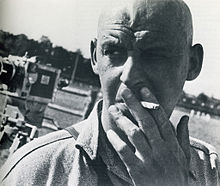
Personal Details:
CAREER:
Alexander Rodchenko was an influential Russian artist and designer who was part of the Constructivist movement in the early twentieth century. He was a pioneering photographer, designer and graphic artist, and his work was revolutionary in its use of abstract forms, dynamic compositions, and innovative materials.
After graduating, he moved to Moscow, where he joined the avant-garde art circles. He was strongly influenced by the Constructivist movement, which sought to use art to develop a new social order, and to revitalize Russia's cultural life.
Rodchenko began to experiment with photography in the early 1920s. He became known for his abstract compositions and innovative approach to the medium. He used an asymmetrical camera angle and employed unusual angles and perspectives, creating dynamic and often surreal images. His photographs of everyday life in Russia captured the spirit of the times, and he was also an early proponent of what would become known as the "photomontage" technique.
In the 1920s and 1930s, Rodchenko also worked extensively in the field of graphic design, creating posters, books, magazines and other printed materials. He was a master of the Constructivist style, employing bold shapes and bright colors to convey his message. He also experimented with typography and the use of abstract forms in his work.
Rodchenko also worked in the field of industrial design. He designed furniture, displays, and household products. He was a pioneer in the use of modern materials such as steel, plastic, and plywood. His designs were functional and often minimalist in style.
In the 1930s, Rodchenko began to move away from the Constructivist movement, and began to focus more on painting. His work from this period was often inspired by traditional Russian folk art.
Throughout his career, Rodchenko was a leader in the avant-garde art circles in Russia, and his work was widely exhibited and published. He was a major influence on the development of modern art and design, and his work has had a lasting impact on the field.
He was a prolific artist, producing thousands of works during his career. His work is held in numerous museums and galleries around the world, and his influence is still felt in the field of art and design today.