Oil Painting » List of Painters » Annibale Carracci
Annibale Carracci
Annibale Carracci (1560?1609) was an Italian Baroque painter who played a pivotal role in the development of Baroque art and is considered one of the great masters of the late Renaissance. Born in Bologna, Carracci came from a family of artists, and his early training was influenced by his cousin, Ludovico Carracci, and brother, Agostino Carracci. The Carracci family's artistic legacy was rooted in the academic environment of the Accademia degli Incamminati (Academy of the Progressives), which they founded in 1582. This academy sought to revive classical ideals in response to the mannerism that had dominated the late 16th century.
Annibale Carracci's approach marked a departure from the artificial, exaggerated style of mannerism, embracing instead the naturalism and classical themes of the Renaissance. His works often combined a refined use of color, dramatic light and shadow, and a focus on human emotion, laying the groundwork for the more dynamic and emotional Baroque style that would be developed by artists such as Caravaggio and Peter Paul Rubens.
Annibale's major contribution was in the realm of fresco painting. His most renowned work is the ceiling fresco in the *Galleria Farnese* in Rome, painted between 1597 and 1601. This massive commission was for Cardinal Odoardo Farnese, and it exemplifies Carracci's genius. The frescoes depict scenes from Ovid's *Metamorphoses* and feature a complex blend of mythological figures, allegorical imagery, and classical architectural elements. The work is considered a landmark of Baroque art for its grandeur, innovative use of perspective, and vibrant color palette.
Carracci was also known for his versatility, excelling in both large-scale religious and mythological scenes as well as smaller, more intimate works. His religious paintings often carried deep spiritual and emotional resonance. One such piece is the *The Madonna and Child with St. Anne*, in which the figures are depicted with tender realism, combining the sacred with a more humanistic approach. In his mythological works, Carracci demonstrated an ability to inject vigor and motion into classical subjects, giving them a contemporary freshness.
One of his key innovations was his emphasis on direct observation of nature. While other artists of his time relied heavily on the idealized forms of the Renaissance, Carracci's focus on nature was central to his style. He was particularly attentive to human anatomy and the subtleties of light and shade, which helped him achieve a lifelike quality in his figures. His skillful use of chiaroscuro (the contrast between light and dark) would influence the development of Baroque realism, especially in the works of his contemporaries like Caravaggio.
Though Annibale Carracci was a major figure in the artistic circles of his time, his impact was felt not just through his own paintings but also through his contributions to the development of a new generation of artists. His teachings and the Carracci Academy helped establish a new direction in Italian painting, making him a central figure in the evolution of Baroque art. His work bridged the Renaissance and Baroque periods, combining the classical ideals of the former with the dynamic, emotionally engaging style of the latter, securing his place as one of the most important painters of his era.
Personal Details
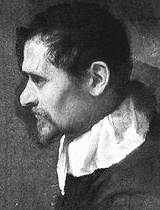
| Name | Annibale Carracci |
| Place of birth | Bologna |
| Date of Birth | November 3, 1560 |
| Date of Death | July 15, 1609 |
| Nationality | Italian |
| Field | Painting |
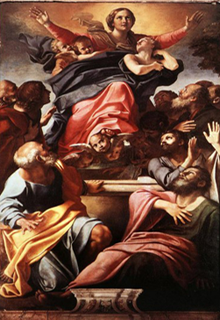
| Popular Paintings | The Assumption |
| Movement | Baroque |
Career:
Annibale, with the design and implementation of noble fresco series as the lyrical Romulus cycle (1588-1592), in Bologna's Palazzo Magnani, was immediately recognized as the most talented work belonging to the Carracci family.Among his oil paintings of this period include The Butcher's Shop and The Assumption.
Annibale was invited to Rome in the year 1595 to adorn the state apartments of Palazzo Farnese,which were the city’s most fabulous fresh private palace.He started his masterpiece, the splendid ceiling frescoes in the Galleria, by the year 1597. Set against a painted architectural background, portraying stucco heroic pictures, bronze plaques, and engraved marble decorations were 11 huge easel paintings in elaborate frames. They depict, in idealized human form, scenes of the pagan gods, fetched from the fables of the Roman poet Ovid. Completed by 1604, the frescoes astonished Rome's artistic world.
Works of Annibale Carracci: