Oil Painting » List of Painters » Arnold Bocklin
Arnold Bocklin:
Arnold Bocklin (1827–1901) was a Swiss symbolist painter, widely regarded for his visionary works that blend dreamlike fantasy with vivid representations of mythological and allegorical themes. His deeply imaginative paintings often explore the realms of the supernatural, the mysterious, and the introspective, leaving an indelible mark on the Symbolist movement and influencing later developments in surrealism and other avant-garde art movements.
Born in Basel, Switzerland, Böcklin showed an early talent for art, and his parents supported his decision to pursue a career as an artist. He initially studied at the Academy of Fine Arts in Düsseldorf, Germany, where his early work was influenced by the classical tradition and the landscape painting of the Romantic period. However, as his career progressed, he began to diverge from these conventions, seeking instead to explore the spiritual and psychological depths of the human experience through art.
Böcklin's work was often infused with a fascination for the past, particularly ancient mythology, classical antiquity, and the symbolism of nature. His landscapes and figures often evoke a sense of mystery, taking viewers into otherworldly realms filled with allegorical significance. His most famous and influential works feature mythical creatures, gods, and haunting scenes that blur the line between reality and the fantastical. Böcklin's ability to create dreamlike, otherworldly environments set him apart from his contemporaries and made him an enigmatic figure in the art world.
One of Böcklin's most iconic paintings is "Isle of the Dead" (1880), a work that epitomizes the haunting and symbolic nature of his art. The painting depicts a solitary boat transporting a figure, shrouded in mystery, toward a desolate island. The island is surrounded by dark waters and steep cliffs, and its eerie atmosphere conveys a sense of death, the afterlife, and the unknown. The sense of isolation and the ominous mood of the painting evoke universal themes of mortality and existential contemplation. "Isle of the Dead" became one of Böcklin's most widely recognized works and was reproduced in many variations during his lifetime.
Another notable work by Böcklin is "The Self-Portrait with a Death Head" (1872), which reveals his deep engagement with themes of mortality, self-reflection, and the darker aspects of the human psyche. In this haunting self-portrait, the artist confronts death and the macabre, an expression of his preoccupation with the transient nature of life.
Böcklin’s works are often characterized by their masterful use of color and light. He created haunting atmospheres using a combination of shadow and radiant light, often using the landscape as a metaphor for the internal worlds of his characters. His portrayal of nature was highly symbolic, using natural elements like water, trees, and light to convey deeper emotional or philosophical meanings. Böcklin’s unique ability to evoke both beauty and unease in his depictions of nature set him apart as a master of the Symbolist movement.
Though Böcklin did not achieve widespread fame during his lifetime, his work has had a lasting impact on the development of European art. His visionary style laid the groundwork for future artists such as Max Ernst and Giorgio de Chirico, who would further explore the psychological and surreal aspects of art in the 20th century. Today, Böcklin is recognized as one of the key figures in Symbolism, and his paintings are admired for their technical brilliance, emotional depth, and imaginative power. His exploration of death, the afterlife, and the mysteries of the human soul continue to resonate with contemporary audiences, solidifying his legacy as a master of the mystical and the sublime.
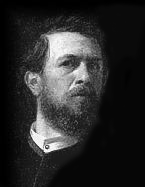
Personal Details
| Name | Arnold Bocklin |
| Place of birth | Basel,Switzerland |
| Date of Birth | October 16, 182 |
| Date of Death | January 16, 190 |
| Nationality | Swissp |
| Field | Paintings |
| Works | Isle of the Dead,Odysseus and Calypso |
| Movement | Symbolism |
Career:
Arnold Bocklin was a Swiss Symbolist painter whose moody landscapes and ominous allegories enormously influenced late 19th-century German artists.Böcklin initially won a great reputation with the huge mural “Pan in the Bulrushes” .This mural brought him the support of the King of Bavaria.
He got an opportunity to teach at the Weimar Art School,but his heart was always set towards Italian Landscapes. After an hiatus during which he finished his mythological frescoes for the decoration of the Public Art Collection, in Basel, he settled in Italy and only sporadically he returned to Germany in order to experiment with flying machines.
Works of Arnold Bocklin:
 |