Oil painting -> List of Painters -> Bernardo Bellotto
Bernardo Bellotto
 |
Personal Details
|
Career:
His international reputation grew, and in 1758 he accepted an invitation from Empress Maria Theresa to come to Vienna, where he painted views of the city's monuments. Thereafter he worked in Munich and then again in Dresden.
When King August III of Poland, also an Elector of Saxony, who usually lived in Dresden, died in 1763, Bellotto's work became less important in Dresden. As a consequence, he left Dresden to seek employment in St Petersburg at the court of Catherine II of Russia. On his way to St. Petersburg, however, Bellotto accepted an invitation in 1764 from Poland's newly elected King Stanisław August Poniatowski to become his court painter in Warsaw.
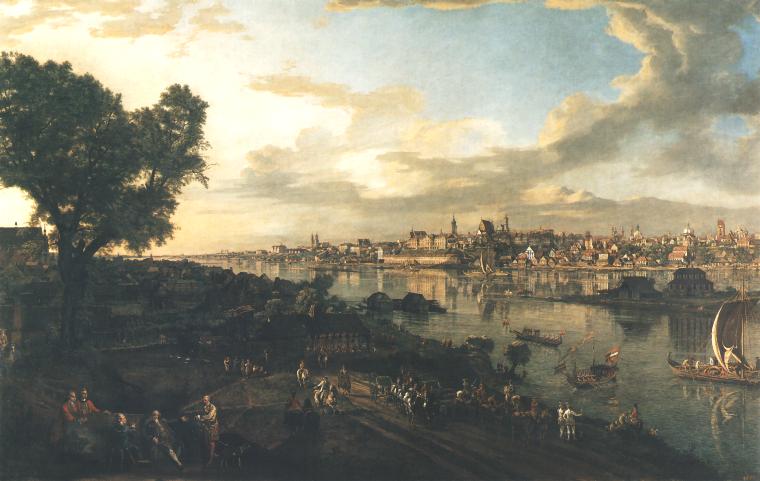
Here he remained some 16 years, for the rest of his life, as court painter to the King, for whom he painted numerous views of the Polish capital and its environs for the Royal Castle in Warsaw, complement of the great historical paintings commissioned by Poniatowski from Marcello Bacciarelli. His paintings of Warsaw, later relocated to Moscow and Leningrad, were restored to the Polish Communist Government and were used in rebuilding the city after its near-complete destruction by German and Russian troops during World War II.
Works Of Bernardo Bellotto:
|
|