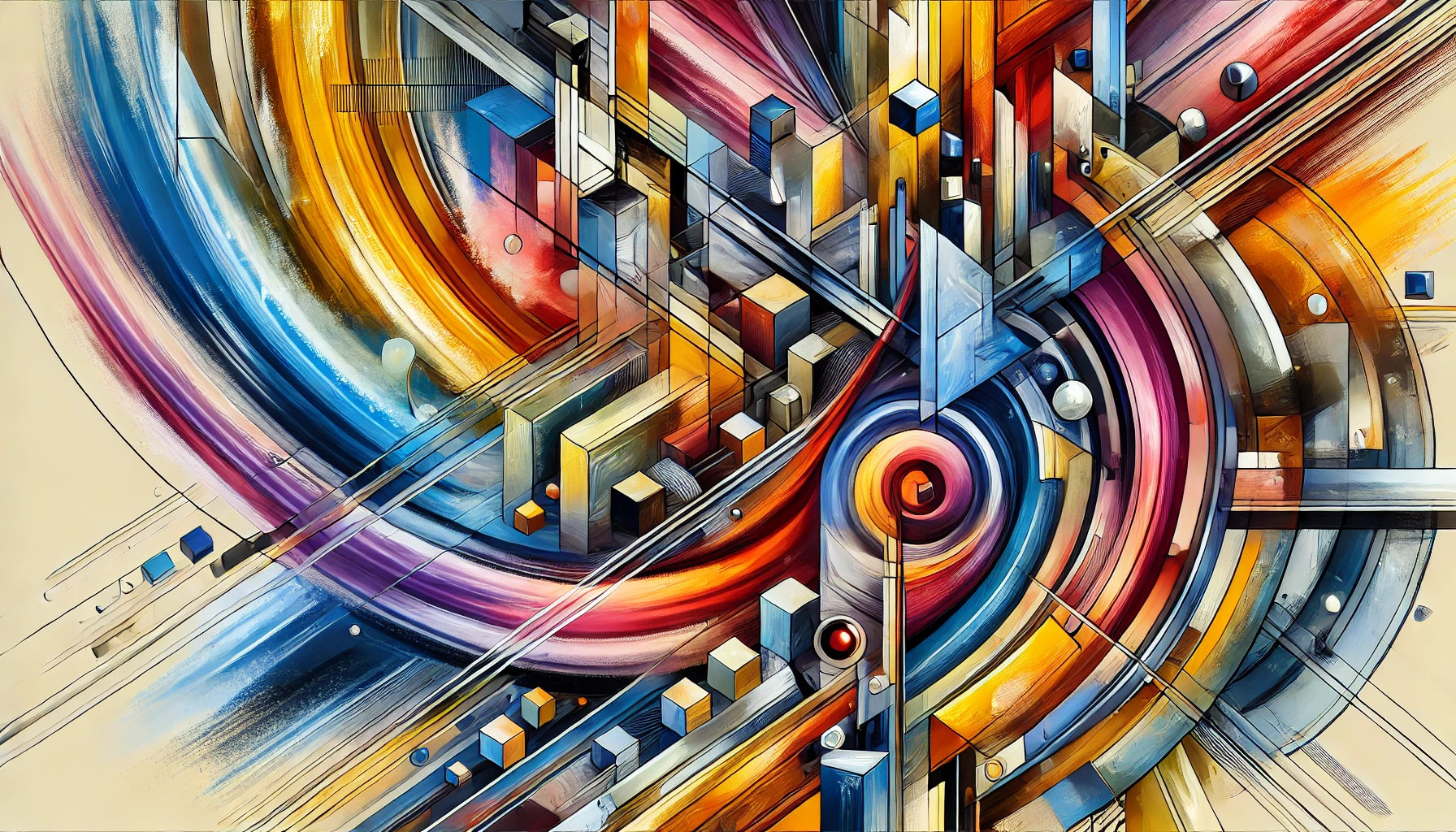
Edo Murtic
Edo Murtic (May 4, 1921 - January 2, 2005) was a renowned painter from Croatia.
Murtic was born in Velika Pisanica near Bjelovar (then in Yugoslavia). He moved with his parents to Zagreb early in his childhood, and received his elementary and high school education there, where he also attended the School of Crafts. In 1939, Murtic enrolled in the Academy of Fine Arts in Zagreb and studied for the next year under Petar Dobrovic in Belgrade. Upon returning to Zagreb, he then studied under Ljubo Babic.
Murtic was influenced by socialist ideas since his childhood, and at the outbreak of World War II he became involved in the anti-fascist movement. In the spring of 1944, Murtic joined the liberation forces, where he first began his work as an artist, designing graphics, posters, and books. After the end of the war, Murtic's work was widely recognized, not only in Yugoslavia but worldwide.
Since his first one-man exhibition in Zagreb in 1952, Murtic's artistic style had evolved significantly. His work from the WWII and the post-war period mainly included figurative paintings, while his modern work involved abstract expressionism. He held over a hundred and fifty standalone exhibitions and participated in around three hundred group exhibitions on all continents.
Murtic was an academician of the Croatian Academy of Sciences and Arts and a member of the Croatian Helsinki Committee for Human Rights. In his last years Edo Murtic lived in Zagreb and Vrsar in the Istra region. He died in a hospital in Zagreb.