Fuller Potter
Fuller Potter (1910 - 1990) was an American Abstract expressionist artist. He was born in New York and lived most of his life in his Ledyard, Connecticut estate. He studied at the Groton School for a short time, and started painting in the traditional modes of representation.
Even in his youth Fuller Potter's pencil and ink drawings projected the strong graphic energy which was to be his hallmark. He spent several of his formative years painting landscapes and portraits in the Southern Appalachia region. After studying briefly with Thomas Hart Benton, he started his transition towards abstract painting. Combining graphic skills with his mastery of color, he followed a path that would lead to his artistic peak, during his full abstract expressionist period. Several of his works can be seen on.During the 1940's, his work was still mostly figurative, but showed clear, deliberate avoidance of ordinary representation. His portraits, landscapes and still lives from this period carry true beauty and sophistication.
From the early 1950's on, Fuller Potter's style kept with the early works of Ad Reinhardt and with Jackson Pollock's 1940's pre-drip works.As mentioned in Jeffrey Potter's "To a Violent Grave", which is a biography of Jackson Pollock's last years, Fuller is reported to have shared drinking sessions with Jackson Pollock in the mid-1950's. After these encounters, which didn't take place during a long period of his life, Fuller's work definitively evolved towards a mature and personal form of abstraction.
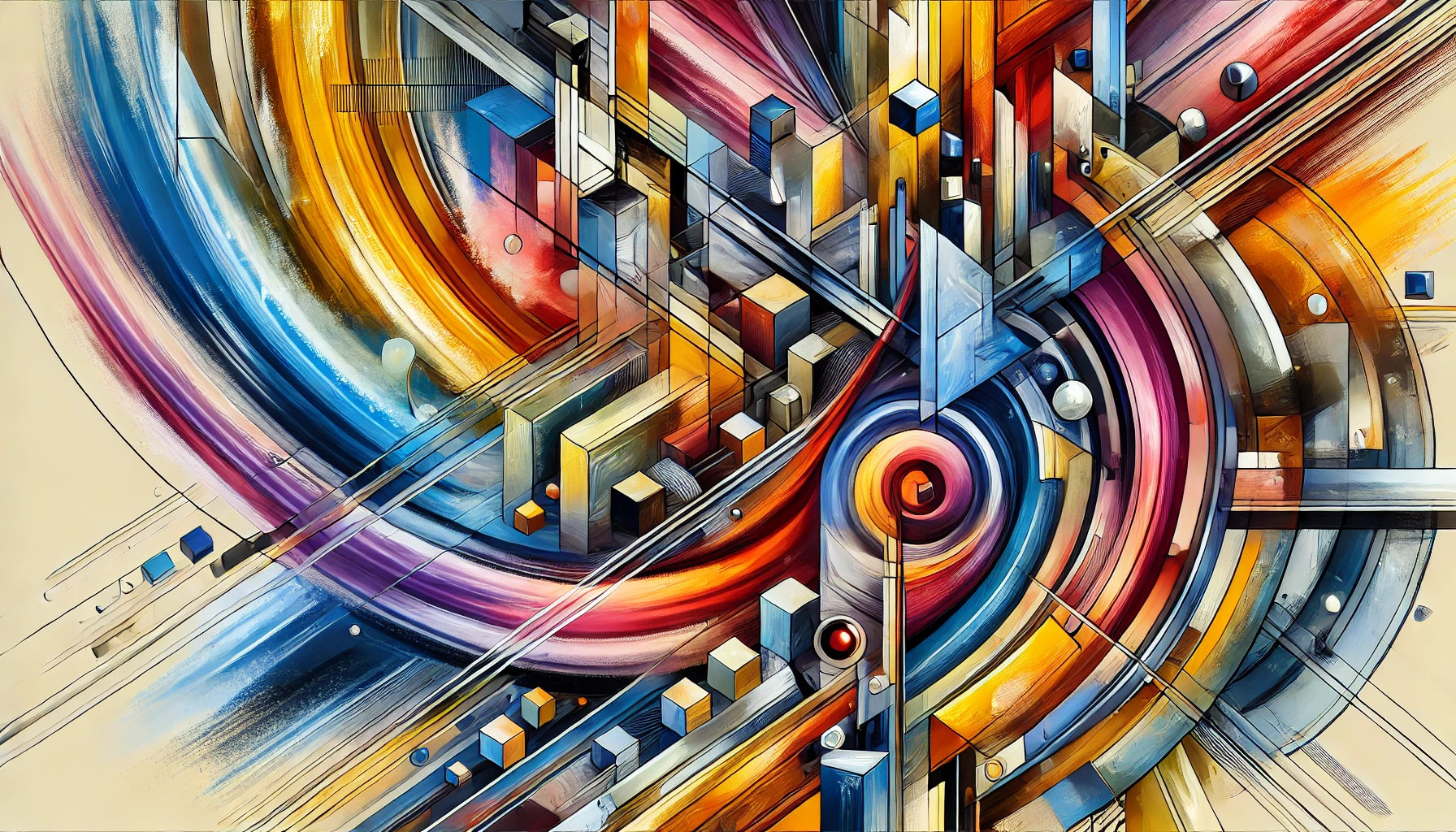
Fuller Potter never pursued the drip/throw action mode of abstract exressionism to any notable degree. His paint is delivered with loaded brush in hand, opulently, generously and aggressively. His works are insistent and not to be denied.For Fuller Potter, if a clear structure is underlying or is hidden within an abstract painting, it is to be considered as a kind of figurative representation. For Fuller, as the pursuit of total abstraction is of the essence, it requires avoiding the pitfall and disruption caused by a mixture of abstract and figurative styles.
Therefore, the overall structure underlying Fuller's mature paintings will always be abstruse and minimal. This lack aims at heightening and compounding the piece's abstraction, and by doing so, it aims at making these paintings readily show themselves to the viewer as integrated, authentic and self-powered massive objects.What will organize his piece, what will give it unity and bring forth its coherence, is precisely the whirlwind trail of colors, the turbulence of shapes, and the sheer, oozing, palpable will to harness these colliding and racing energies.
Fuller Potter's best works are so thoroughly worked out, developed to such exquisite richness and subtlety, that their impact leads to extremes of emotion: from disturbing and excruciating feelings, all the way to exhilarating and enraptured states.Fuller Potter held the reins to a ferocious private muse over decades of prolific, secluded, and astonishing creativity.All abstract expressionists influenced each other during the Fifties.Yet, whatever derivations or influences may have taken place within this period, an original power is manifest in all of Potter's paintings. Each one conveys its own devastating form of present "energy", an energy which relentlessly insists on imposing itself on us.