Oil Painting » List of Painters » Hans Von Aachen

Personal Details
| Name | Hans Von Aachen |
| Place of birth | Cologne, Germany |
| Date of Birth | 1552 |
| Date of Death | March 4, 1615 |
| Nationality | German |
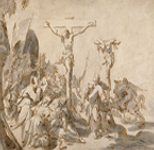
| Popular Paintings | Crucifixion, Allegory of the Turkish Wars - The Declaration of War at Constantinople |
| Movement | Mannerist |
Hans von Aachen was a prominent German painter who made significant contributions to the art world during the late 16th and early 17th centuries. Known for his elaborate and highly detailed works, von Aachen was a master of the Mannerist style, blending elements of the Renaissance and Baroque periods in his art. His paintings often featured mythological and allegorical subjects, showcasing his technical skill and creativity.
Born in Cologne, Germany, in 1552, Hans von Aachen showed an early talent for painting. He received his initial training in Cologne under the guidance of his uncle, the portrait painter Hans von Aachen the Elder. Later, he moved to Italy, where he studied the works of Italian masters such as Titian and Tintoretto. This exposure to the Italian Renaissance had a profound influence on von Aachen's artistic style.
Upon his return to Germany, von Aachen became court painter to the Holy Roman Emperor Rudolf II in Prague. This appointment allowed him to work on numerous prestigious commissions for the imperial court, including portraits of the Emperor himself and other members of the royal family. Von Aachen's portraits were highly sought after for their meticulous attention to detail and their ability to capture the essence and personality of his subjects.
In addition to portraiture, Hans von Aachen was known for his skill in creating complex narrative paintings. He often depicted scenes from classical mythology, biblical stories, and allegorical subjects. His compositions were carefully constructed, with a keen sense of spatial arrangement and a wealth of intricate details. Von Aachen's paintings were characterized by vibrant colors, dramatic lighting, and a sense of movement, which brought his subjects to life.
One of von Aachen's most famous works is "The Triumph of Truth," an allegorical painting that depicts Truth as a female figure surrounded by various virtues and vices. The painting showcases von Aachen's ability to convey symbolic meaning through his art, as well as his mastery of the human form and facial expression.
Hans von Aachen's influence extended beyond his own works. He had a significant impact on the development of the Mannerist style in Germany, and his innovative approach to composition and subject matter inspired many artists of his time. His detailed and intricate style, combined with his ability to infuse his paintings with emotion and narrative, set him apart as a leading figure in the art world of his era.
Despite his considerable talent and success, von Aachen's personal life was marked by tragedy. He suffered the loss of his wife and children, which deeply affected him and influenced the themes of his later works. Towards the end of his life, von Aachen returned to his native Cologne, wher e he continued to paint until his death in 1615.
Hans von Aachen's legacy as a painter continues to be celebrated and appreciated today. His works can be found in prestigious art collections and museums around the world. His contributions to the Mannerist style and his ability to create visually stunning and emotionally resonant paintings have secured his place as one of the notable figures of the late Renaissance and early Baroque periods.
Works of Hans Von Aachen: