Oil painting -> List of Painters -> Paul-Emile Borduas
Early Days:
Borduas was born on November first, 1905, in Saint-Hilaire. He was the fourth child of Magloire Borduas and Eva Perrault. As a child he engaged in bricolage - his first known artistic activity. He received five years of formal elementary school education, (which ended at the age of twelve) and some private lessons from a village resident. Fortuitously, Borduas met Ozias Leduc in the winter of 1921-1922, and Leduc agreed to take the young artist artist under his wing. At the age of sixteen he became an apprentice to Ozias Leduc, who was a church painter and decorator.
 |
Personal Details
|
Career:
Leduc provided Borduas with a basic artistic training, teaching him how to restore and decorate churches. Leduc arranged for Borduas' instruction at the Ecole Technique, in 1919, in Sherbrooke, Québec. In 1923, assisted by a scholarship Leduc had secured for him, he enrolled in the École des Beaux-Arts in Montréal, continuing to work for Leduc at the same time. He received prizes for his paintings at both of these institutions. Despite discord between Borduas and the school administration, he continued his studies at Leduc's urgings.
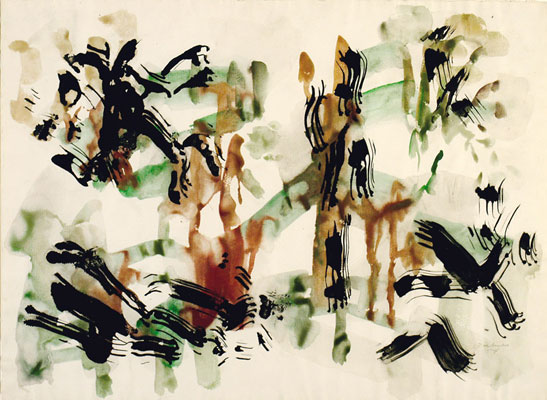
Works Of Paul-Emile Borduas:
|
|