| |
Pietro da Cortona
Pietro da Cortona (Pietro Berettini) (1596- May 16, 1669) was
an Italian painter and architect.
Along with Giovanni Lorenzo Bernini and Francesco Borromini, Pietro
da Cortona was the brightest shining star of the Roman High Baroque.
With his illusionistic painting and church buildings he embellished
17th century Rome.
Church of Santi Luca e Martina, RomeHis first works were painted
for the Sacchetti family and are now in the Capitoline Gallery,
Rome, along with other works of his, but he was soon taken up by
the powerful Barberini family - the family of Urban VIII - for whom
he painted frescoes in the ancient church of Santa Bibiana, Rome
(1624-1626), followed by his greatest work, the ceiling in the Palazzo
Barberini (now the Galleria Nazionale, Rome). This is a huge fresco
representing an Allegory of Divine Providence and Barberini Power,
begun in 1633 and completed in 1639. A sketch for it is now exhibited
with it, but its authenticity is open to doubt. The fresco is a
huge illusion, with the central field apparently open to the sky
and scores of figures seen 'al di Sotto in Su' apparently coming
into the room itself or floating above it. While working on this
Pietro also went to Florence and began a series of similar frescoes
in the Pitti Palace; he also began a series of frescoes in the Chiesa
Nuova, Rome, which was not finished until 1665. Towards the end
of his life he devoted much of his time to architecture, but he
published a treatise on painting in 1652 under a pseudonym and in
collaboration. He refused invitations to both France and Spain.
With the help of numerous pupils, of whom Ciro Ferri was the most
important, he painted many other frescoes and easel pictures in
Rome and Florence.
Among Pietro's more important architectural projects are Santa
Luca e Martina (completed in 1664) at the Forum Romanum, the exterior
programme of the ancient Santa Maria della Pace (1656-1667), and
the façade (with an unusual loggia) of Santa Maria in Via
Lata (appr. 1660).
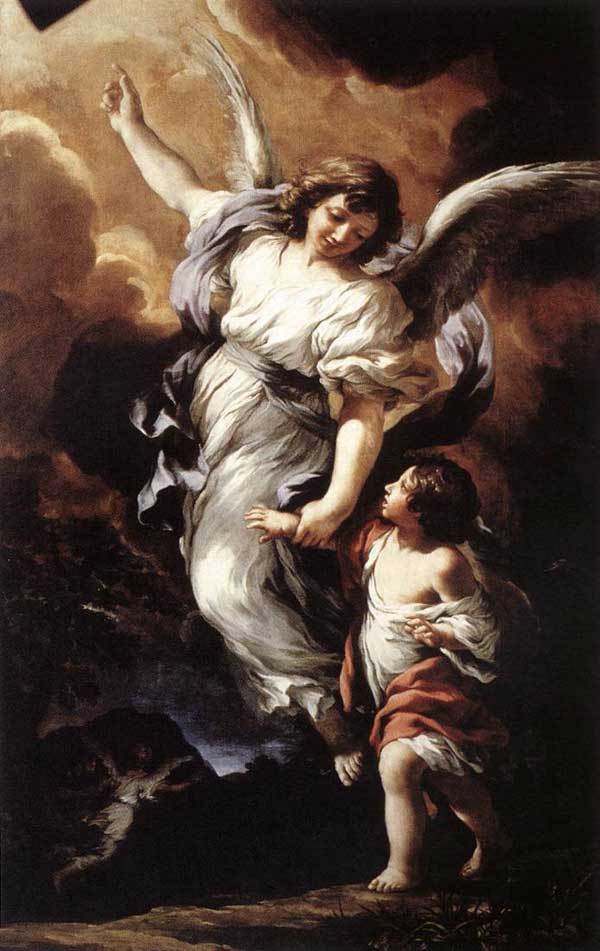
The paintings are the excellent portrayal of the events and scenes
that we see around us. The painters are the best cameras of the
world. They reproduce many different types of pictures. They even
draw imaginary pictures that do not exist in this world. We tend
to use both thinned oil paints and dense oil paints. Masterpieces
can be dyed more than once, but each time it may be different from
the existing paintings.h
|
|
|
|
|
| |
| | | | | | | | | | | | |
|
|
|