| |
Robert Motherwell
Robert Motherwell (January 24, 1915 – July 16, 1991) was
an Abstract Expressionist painter. Born in Aberdeen, Washington,
he was the youngest of "the New York School" (he coined
the term), which also included Jackson Pollock, Mark Rothko, Willem
de Kooning, and Philip Guston.
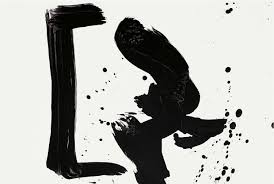
As an abstract expressionist, his greatest goal was to use the
staging of his work to convey to the viewer, the mental and physical
engagement of the artist with the canvas. He preferred using the
starkness of black acrylic paint as one of the basic elements of
his paintings. One of his more well-known techniques involved diluting
his paint with turpentine to create a shadow effect.
With the advent of Pop Art and its concentration on popular culture
themes, the art public began to long for the idealism of the Abstract
Expressionists. In relation to Andy Warhol’s soup cans, Motherwell's
large abstract paintings began to achieve a majesty in the public
eye. Motherwell’s politics and spirituality were welcome reminders
of a time when one could make art that did not engage the cynicism
of a post-modern era. No longer the black sheep of the art world,
Motherwell began to enjoy the fruits of years of dedicated work.
It seemed, however, for many of the Abstract Expressionists that
the newly found appreciation could not counteract the turbulence
of those early years—many dying young or taking their own
lives. Though somewhat alone, Motherwell committed himself to producing
highly experimental work of emotional depth for the rest of his
life. On July 16, 1991, at the age of 76 he died: the last of the
great Abstract Expressionists. From the 1949 painting, At Five in
the Afternoon, until the end of his life, Motherwell continued his
search for a personal and political voice in abstraction. This search
produced a body of work that remains a testament to the human soul
and its persistence, and to the genre of abstract painting out of
which it came.
The paintings are the excellent portrayal of the events and scenes
that we see around us. The painters are the best cameras of the
world. They reproduce many different types of pictures. They even
draw imaginary pictures that do not exist in this world. We tend
to use both thinned oil paints and dense oil paints. Masterpieces
can be dyed more than once, but each time it may be different from
the existing paintings.h
|
|
|
|
|
| |
| | | | | | | | | | | | |
|
|
|