Personal Details:
Yaacov Agam
Yaacov Agam is an Israeli sculptor and painter best known for his pioneering work in kinetic art, a genre that incorporates movement and optical illusions as essential elements of the artwork. Born on May 6, 1928, in Rishon LeZion, Palestine (now Israel), Agam's contributions to the world of art have left a lasting legacy, particularly in the realm of interactive and dynamic art forms.
Early Life and Education
Agam was born in the region under British Mandate rule, and his early years were shaped by the cultural and political upheavals of the time. As a young artist, Agam was influenced by his background in the Middle East, with a deep connection to both Jewish heritage and the cultural fusion of the region. His artistic journey began with traditional education in art, and he studied at the Bezalel Academy of Art and Design in Jerusalem. Agam further honed his skills in Paris, where he studied at the prestigious Acad?mie de la Grande Chaumi?re. It was during this time that he began to experiment with modern art movements, particularly those that emphasized abstraction and the viewer's interaction with the artwork.
Innovation in Kinetic Art
Agam is most famously known for his development and promotion of kinetic art. This genre involves artwork that changes over time or depends on the viewer's movement or perspective. Agam sought to break away from the static, traditional artwork, inviting the observer to be an active participant in the art experience. He achieved this by incorporating mechanisms, reflections, and shifts in light within his paintings and sculptures, enabling them to transform when viewed from different angles or in varying light conditions.
One of Agam's hallmark pieces, "Agamograph", is a form of kinetic art in which the viewer sees different images as they shift their position. These works are made up of multiple layers of images or colors that appear to change depending on the angle from which the viewer is observing them. This innovation challenged conventional ways of looking at art and helped redefine the relationship between the artist and the audience.
Visual Language and Techniques
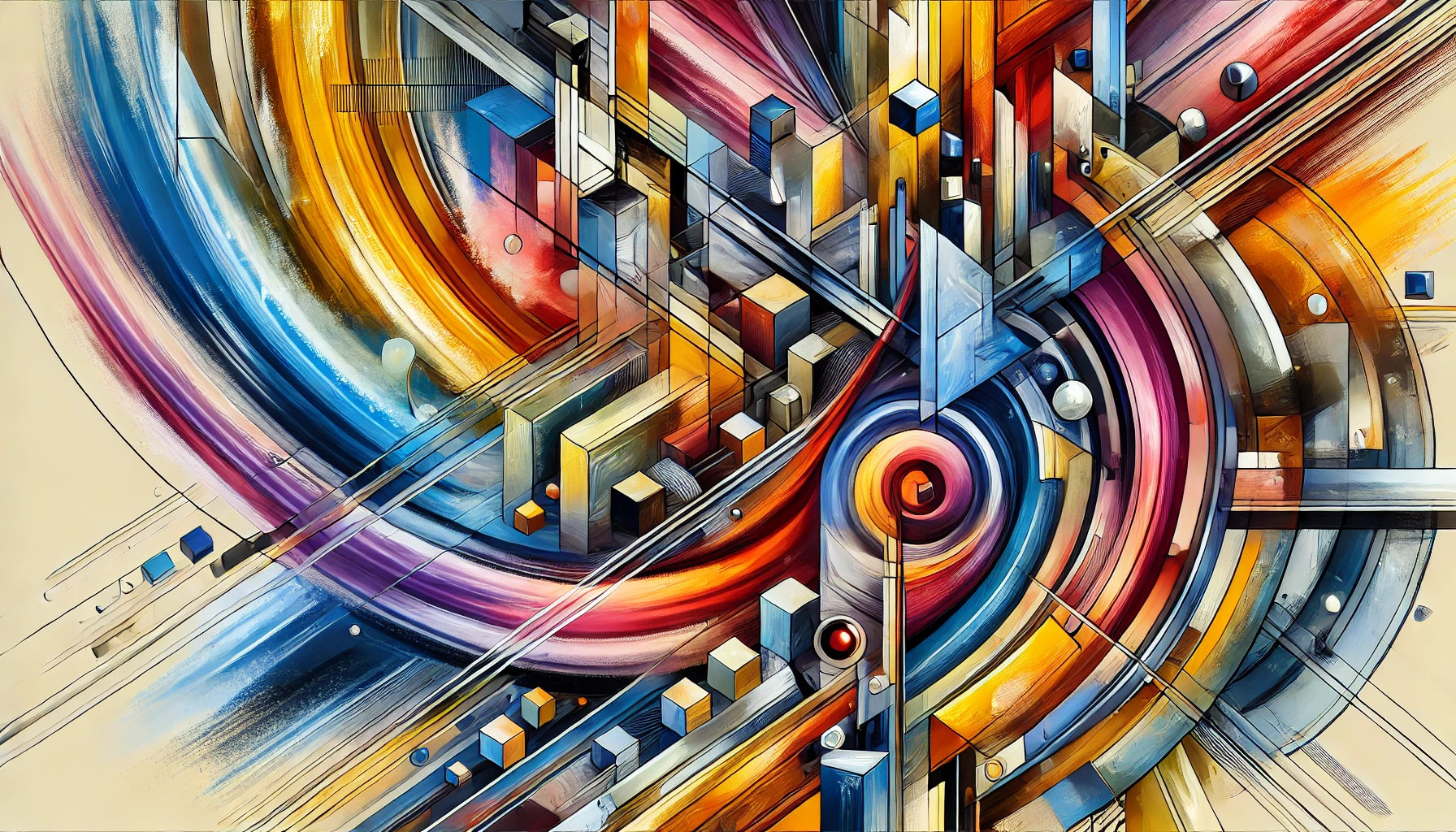
Agam's visual language is characterized by the use of geometric shapes, vibrant colors, and patterns that seem to oscillate or move. He was deeply inspired by the idea of "dynamic equilibrium," a concept in which motion and stillness coexist. Agam's works are often structured in grids, with each piece designed to evoke a sense of movement. His use of color theory was also essential in achieving the desired optical effects, relying on contrasting hues to create a sense of depth and change.
His most famous works include large-scale sculptures and installations, such as the "Fountain of Agam" in the city of Tel Aviv, as well as his "Revolving Tower" (1965), a sculpture designed to rotate on its own axis, which exemplifies his commitment to kinetic art. Agam also worked with stained glass, murals, and even architecture, applying his principles of kinetic art across a variety of media.
Influence on Modern Art
Agam's contributions have influenced a wide range of contemporary art movements, especially in the fields of optical and interactive art. His work has inspired artists involved in Op Art (Optical Art), who also explored the manipulation of visual perception. Through his commitment to viewer participation, Agam has emphasized that art is not merely something to be observed but also something to be experienced.
Agam's legacy also extends beyond the art world into the realm of architecture and public spaces. His creations have been featured in urban locations worldwide, contributing to a broader appreciation of art in everyday life. Some of his monumental works are installed in museums, airports, and city squares, enhancing the public's connection with art in a dynamic, participatory way.
Recognition and Legacy
Yaacov Agam's work has earned him numerous accolades and exhibitions around the world. He is widely recognized as one of the most important figures in the development of kinetic and optical art. His works have been exhibited in major museums such as the Museum of Modern Art (MoMA) in New York and the Centre Pompidou in Paris, and his pieces are part of prestigious collections globally.
Despite his pioneering role in the modern art movement, Agam has remained committed to his initial vision of making art more interactive and accessible to all. His innovations continue to influence new generations of artists who seek to explore the boundaries between viewer and artwork.
In conclusion, Yaacov Agam's contributions to the art world are a testament to the power of innovation and creativity. By challenging traditional notions of static art and integrating movement, interaction, and optical illusion, he has reshaped how we experience and engage with art. Through his vibrant and dynamic works, Agam has truly earned his place as a master of kinetic art.