| |
Oil
Painting -> Zdzislaw Beksinski
Zdzislaw Beksinski
|
Zdzislaw Beksinski
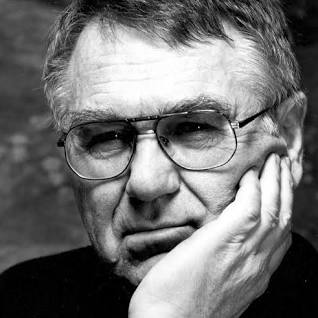
Zdzislaw Beksinski (24 February 1929 –
22 February 2005) was a renowned Polish painter, photographer,
and fantasy artist.
He was born in the town of Sanok in southern
Poland. After studying architecture in Cracow, he returned
to Sanok in 1955. Subsequent to this education he spent several
years as a construction site supervisor, a job he hated. At
that time he became interested in artistic photography and
photomontage, sculpture and painting. He was a very innovative
artist, especially for one working in a Communist country.
He made his sculptures of plaster, metal and wire.
|
His photography offered a taste of things to come in his future
paintings, presenting wrinkled faces, landscapes; objects with a
very bumpy texture which he attempted to emphasise, especially by
manipulating lights and shadows. His photography also depicted disturbing
images, such as a mutilated baby doll with its face torn off, portraits
of people without faces or with their faces wrapped in bandages.
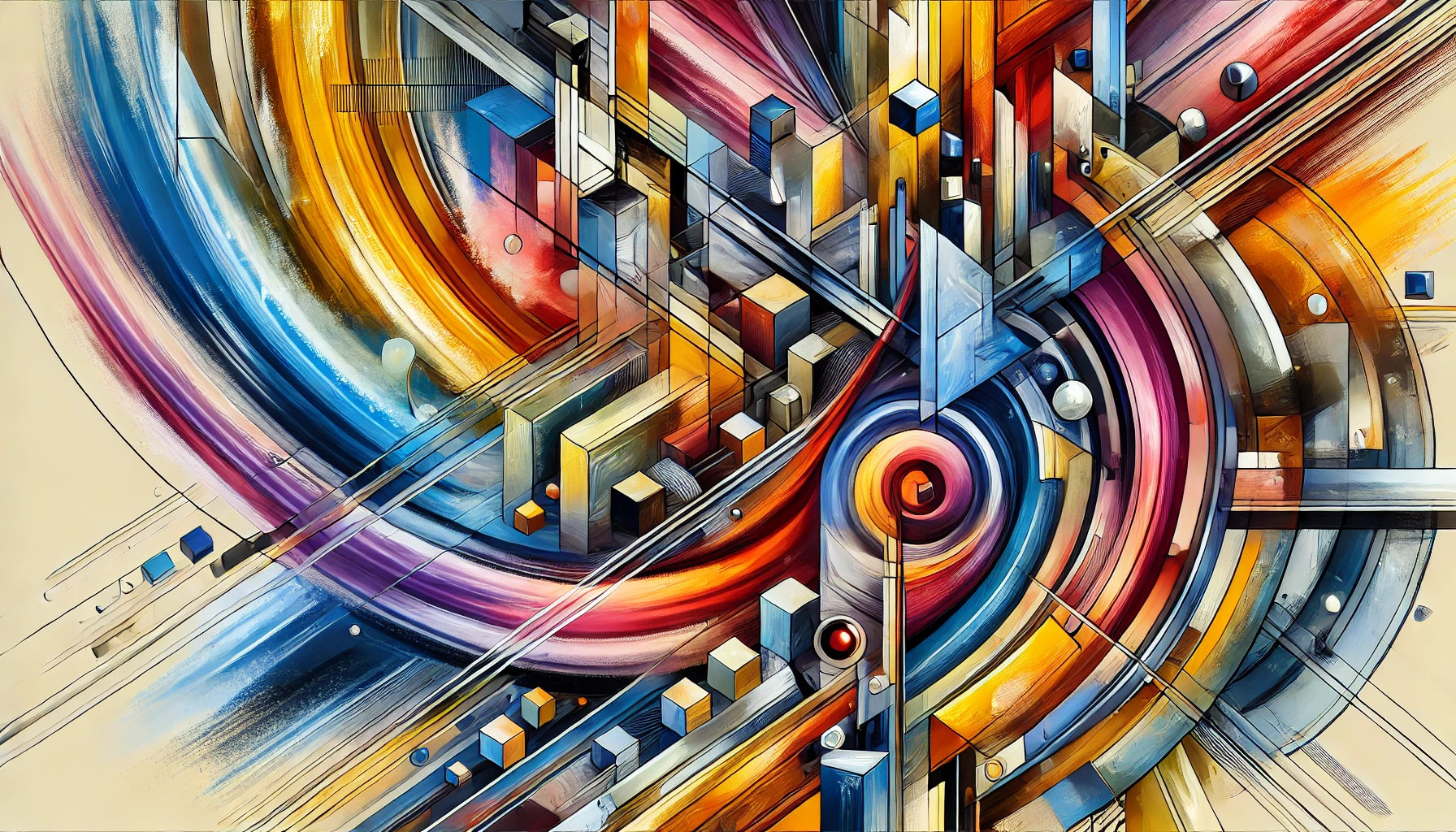
Later, he concentrated on painting. His first paintings were abstract
art, but throughout the sixties he made his surrealist inspirations
more visible. In the 1970s he entered what he himself called his
"fantastic period", which lasted up to the late 1980s.
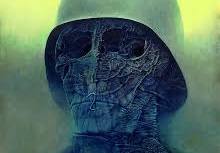
This is his best known period, during which he created very disturbing
images, showing a surrealistic, post-apocalyptic environment with
very detailed scenes of death, decay, landscapes filled with skeletons,
deformed figures, deserts, all very detailed, painted with his trademark
precision, particularly when it came to rough, bumpy surfaces. His
highly detailed drawings are often quite large, and may remind some
of the works of Ernst Fuchs in their intricate, and nearly obsessive
rendering. Despite the grim overtones, he claimed some of these
paintings were misunderstood, as they were rather optimistic, or
even humouristic.
His exhibitions almost always proved very successful. A prestigious
exhibition in Warsaw in 1964 proved to be his first major success,
as all his paintings were sold. In the 1980s his works gained on
popularity in France due to the endeavours of Piotr Dmochowski,
and he gained significant popularity in Western Europe, the USA
and Japan.
Beksinski eventually threw himself into painting with a passion,
and worked constantly, always to the strains of classical music.
He soon became the leading figure in contemporary Polish art.
Before moving to Warsaw in 1977 he burned a selection of his works
in his own backyard, without leaving any documentation on them.
He later claimed that some of those works were "too personal",
while others were unsatisfactory, and he didn't want people to see
them. The 1980s marked a transitory period for Beksinski. His art
in the early 1990s consisted mainly of a series of surreal portraits
and a series of crosses. Paintings in these series were much less
lavish then those known from his "fantastic period", but
just as powerful. In the latter part of the 1990s he discovered
computers, the internet, and digital photography, on which he focused
on until his death.
Beksinski always executed his paintings and drawings in either
of two manners, which he respectively calls 'Baroque' and 'Gothic'.
The first is dominated by representation, the second by form. Among
the paintings produced during the past five years, those executed
in the 'Gothic' manner have become more and more frequent, so much
so that pictures in the other style have almost disappeared.
The late 1990s were a very trying time for Beksinski. His wife,
Zofia, died in 1998, and a year later, on Christmas Eve 1999, his
son Tomasz (a popular radio presenter, music journalist and movie
translator) committed suicide. It was Beksinski who discovered his
son's body. Unable to come to terms with his son's death, he kept
an envelope "For Tomek in case I kick the bucket" pinned
to his wall.
On 22 February 2005 he was found dead in his flat in Warsaw with
17 stab wounds on his body, two of which were fatal. The teenage
son of his long time caretaker, who later plead guilty, and a friend
were arrested shortly after the crime. It is known that Beksinski
had recently refused a loan to the young man.
Trivia
Beksinski's art was gloomy and grim, though he himself was known
to be a pleasant person, and though somewhat shy, took enjoyment
from conversation.
He never gave titles to his works.
He painted his paintings on a canvas placed horizontally.
He listened to the music while painting.
His son was a great fan of the band The Legendary Pink Dots. After
his son's suicide the bands albums' Polish editions and reissues
were graced by Beksinki's digital art employed as covers, dedicated
to the memory of Tomasz Beksinski.
He is the only modern Polish artist to have had an exhibition in
the Osaka Museum of Art in Japan.
He himself shunned art, almost never visiting museums or exhibitions.
The paintings are the excellent portrayal of the events and scenes
that we see around us. The painters are the best cameras of the
world. They reproduce many different types of pictures. They even
draw imaginary pictures that do not exist in this world. We tend
to use both thinned oil paints and dense oil paints. Masterpieces
can be dyed more than once, but each time it may be different from
the existing paintings.h
|
|
|
|
|
| |
| | | | | | | | | | | | |
|
|
|