Introduction
Edouard Manet's painting "A Bar at the Folies-Bergere" (1882) is one of the most famous and intriguing works of the Impressionist era. This masterpiece, which was Manet's last major painting before his death in 1883, captures a scene at the Folies-Bergere, a popular entertainment venue in Paris. The painting is not just a representation of a bar scene but a complex composition that reflects themes of modernity, social class, and human isolation.
This oil on canvas painting was painted and exhibited by Edouard Manet at the Paris Salon. The painting depicts an elegant woman standing before a mirror, although critics accusing Manet of ignorance of perspectiveand alleging various impossibilities in the painting have debated this point since the earliest reviews were published.
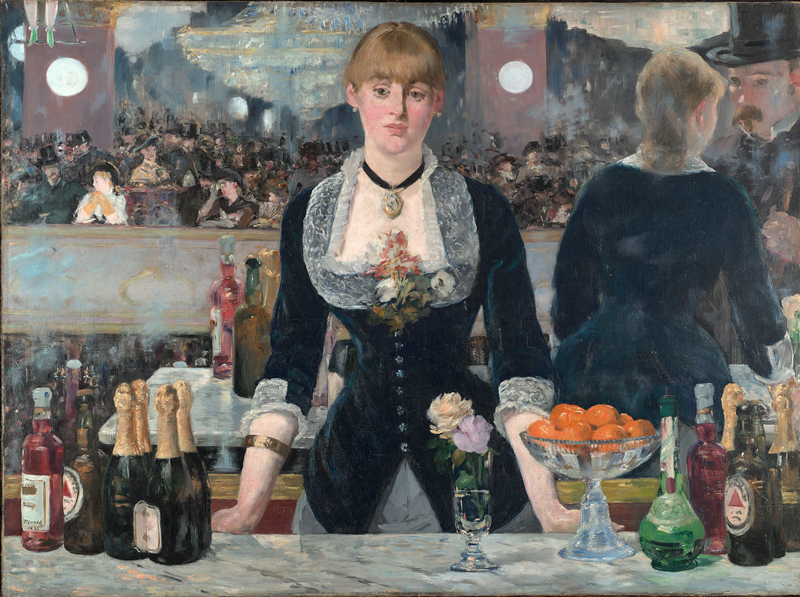
A BAR AT THE FOLIES-BERGERE
Background and Context
The Folies-Bergere was one of the most fashionable cabarets in 19th-century Paris, known for its lively atmosphere, music, and entertainment. Manet, a pioneer of modern art, was fascinated by urban life and often painted scenes that depicted the changing social dynamics of Paris. In "A Bar at the Folies-Bergere", he presents a young barmaid standing behind a counter, surrounded by an array of bottles, fruits, and flowers. In the background, a large mirror reflects the lively crowd and the silhouette of a man who appears to be engaging with the barmaid.
Composition and Technique
Manet's use of perspective in the painting is particularly striking. The mirror, which spans the entire width of the painting, creates a sense of depth and space, but also introduces an element of ambiguity. The reflection does not align perfectly with the figures in the foreground, leading to much debate among art historians about the meaning of this visual distortion. Some interpretations suggest that the reflection represents a different moment in time, while others believe it is an intentional illusion meant to challenge the viewer's perception of reality.
Manet's brushwork is loose yet precise, a hallmark of Impressionism. The light reflections on the bottles and glassware, the soft rendering of the barmaid's face, and the dynamic depiction of the crowd in the mirror showcase his mastery of capturing fleeting moments. The colors are vibrant yet balanced, with the warm tones of the woman's skin contrasting against the cool hues of the background.
Themes and Interpretations
One of the most discussed aspects of "A Bar at the Folies-Bergere" is its underlying themes. The central figure, the barmaid, appears distant and melancholic, despite the bustling atmosphere around her. Her facial expression suggests a sense of detachment, which has led scholars to interpret the painting as a commentary on the isolation of individuals in modern society.
The presence of the male customer in the reflection also raises questions about gender roles and power dynamics. Some art historians argue that the barmaid represents the commodification of women in a society where they were often seen as objects of male desire. The positioning of the man in the reflection suggests an interaction that may hint at the transactional nature of relationships in 19th-century Parisian nightlife.
Legacy and Influence
"A Bar at the Folies-Bergere" remains one of Manet's most celebrated works and is often regarded as a precursor to modern art movements such as Cubism and Surrealism. The painting's innovative use of perspective and its exploration of social themes have inspired countless artists and critics. Today, it is housed in the Courtauld Gallery in London, where it continues to captivate viewers with its enigmatic beauty.
Conclusion
Edouard Manet's "A Bar at the Folies-Bergere" is more than just a depiction of a Parisian bar-it is a profound exploration of human emotion, perception, and society. Through its masterful composition and rich thematic content, the painting remains a timeless masterpiece that invites endless interpretation and admiration.
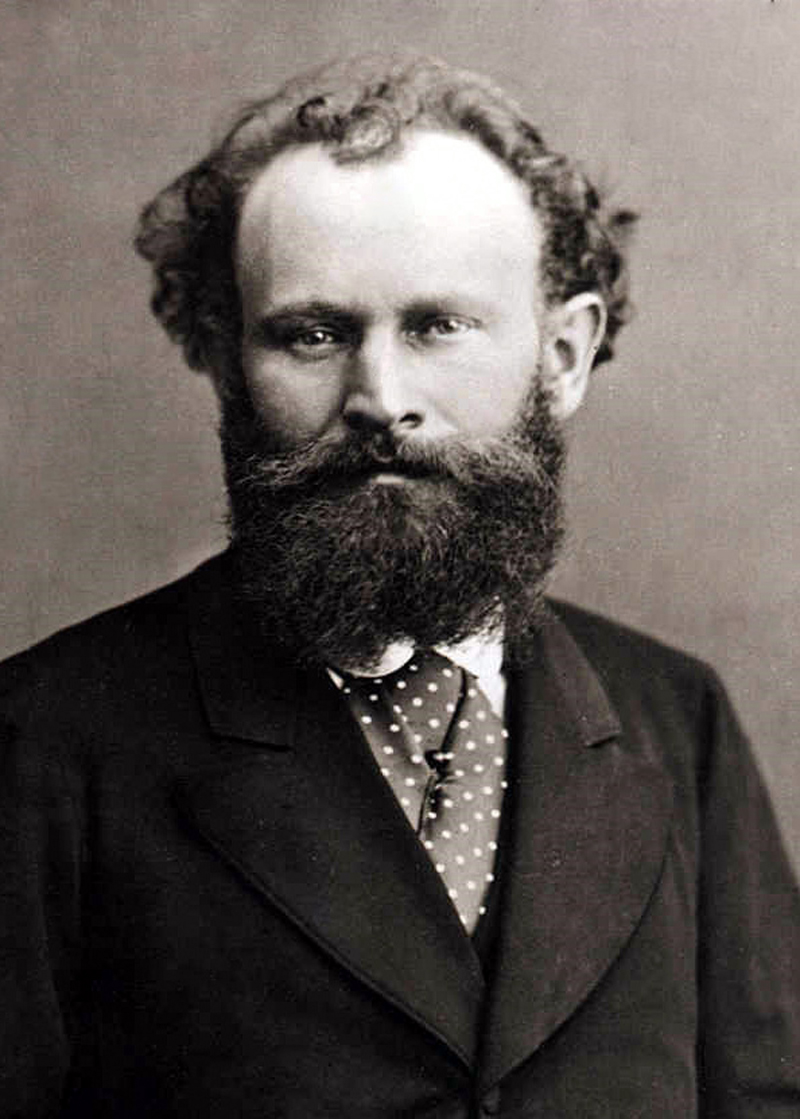
Edouard-Manet
ABOUT THE AUTHOR:
http://www.reviewpainting.com/Edouard-Manet.htm