Oil Painting -> Portrait
A portrait is a painting, photograph,or other artistic representation of a person. Portraits are often simple head shots or mug shots and are not usually overly elaborate or creative.The intent is to show the basic appearance of the person, and occasionally some artistic insight into his or her personality.
The art of the portrait flourished in Roman sculptures, where sitters demanded realistic portraits, even unflattering ones. During the 4th century, the portrait began to retreat in favor of an idealized symbol of what that person looked like. In Europe true portraits of the outward appearance of individuals re-emerged in the late Middle Ages, in Burgundy and France.
Self-portrait by Nicholas Hilliard, 1575, one of the earliest known.One of best-known portraits in the Western world is Leonardo da Vinci's painting titled Mona Lisa, which is a painting of an unidentified woman.
Some of the earliest portraits of people who were not kings or emperors, are the funeral portraits that survived in the dry climate of Egypt's Fayum district (illustration, right). These are the only paintings of the Roman period that have survived, aside from frescos.
When the artist creates a portrait of himself, it is called a self-portrait. The first known in paint was by the French artist Jean Fouquet in c. 1450,[1] but if the definition is extended the first was by the Egyptian Pharoah Akhenaten's sculptor Bak, who carved a representation of himself and his wife Taheri c. 1365 BC. However, it seems likely that self-portraits go back to the earliest representational art.
Portrait photography is a popular commercial industry all over the world. Many people enjoy having professionally made family portraits to hang in their house, or special portraits to commemorate certain events, such as graduations or weddings.
Since the dawn of photography people have made portraits. The popularity of the daguerreotype in the middle of the 19th century was due in large part to the demand for inexpensive portraiture. Studios sprang up in cities around the world, some cranking out more than 500 plates a day. The style of these early works reflected the technical challenges associated with 30-second exposure times and the painterly aesthetic of the time. Subjects were generally seated against plain backgrounds and lit with the soft light of an overhead window and whatever else could be reflected with mirrors.
Self-portrait by Vincent Van Gogh.As photographic techniques developed, an intrepids group of photographers took their talents out of the studio and onto battlefields, across oceans and into remote wilderness. William Shew's Daguerreotype Saloon, Roger Fenton's Photographic Van and Mathew Brady's What-is-it? wagon set the standards for making portraits and other photographs in the field.
Photographic portrait by Yousuf Karsh of Albert Einstein. 1948. Gelatin silver print.In politics, portraits of the leader are often used as a symbol of the state. In most countries it is common protocol for a portrait of the head of state to appear in important government buildings. Excessive use of a leader's portrait can be indicative of a personality cult.
In literature the term portrait refers to a written description or analysis of a person or thing. A written portrait often gives deep insight, and offers an analysis that goes far beyond the superficial. For example, American author Patricia Cornwell wrote a best-selling book titled Portrait of a Killer about the personality, background, and possible motivations of Jack the Ripper, as well as the media coverage of his murders, and the subsequent police investigation of his crimes.
The term portrait also describes the orientation of a rectangular piece of paper, painting or other graphic, denoting that the long axis is vertical. When the long axis is horizontal, it is said to be in landscape mode.
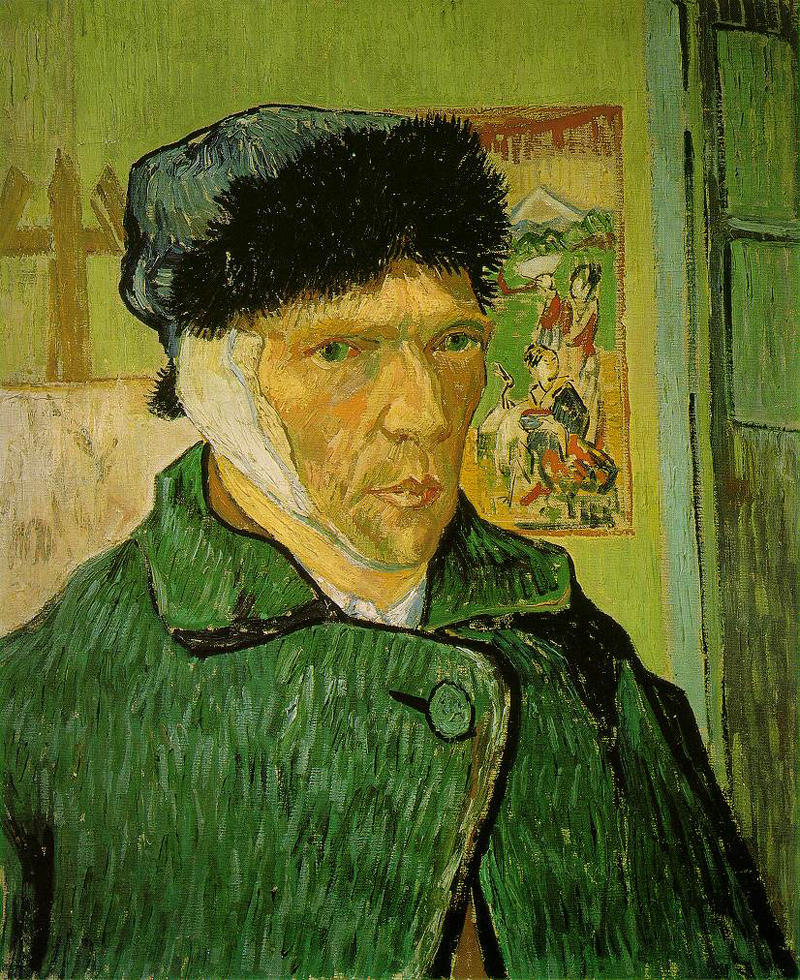
VINVCENT VAN GOGH
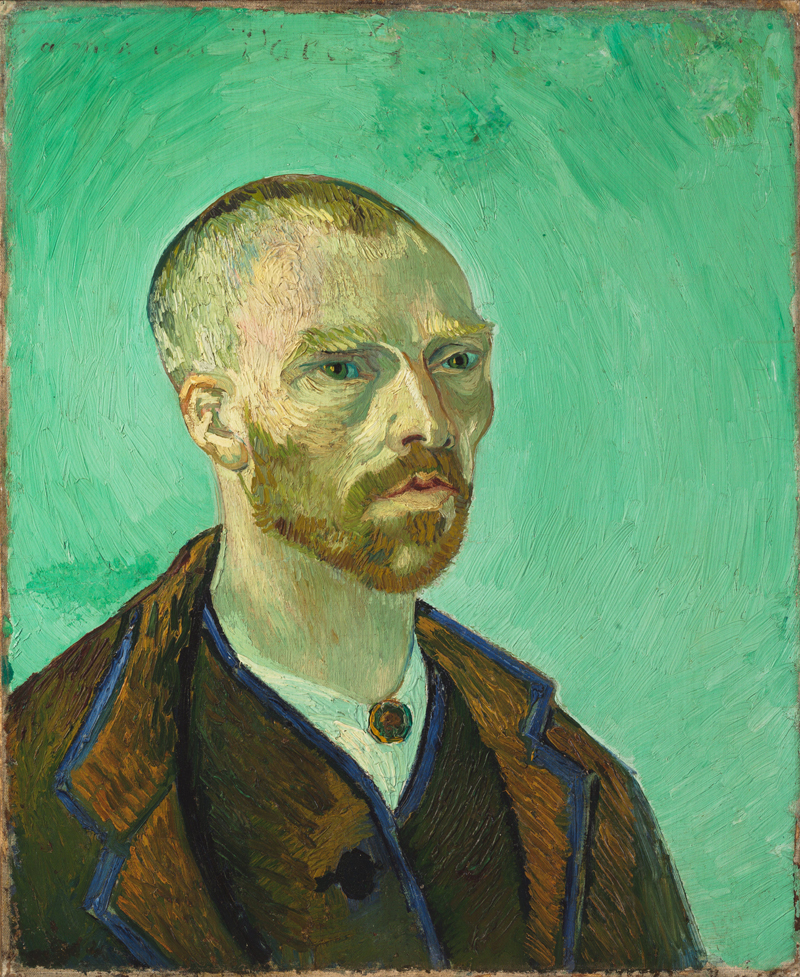
Van Gogh self-portrait dedicated to Gauguin